Preserving the old, perfecting the new
Austin Kerr
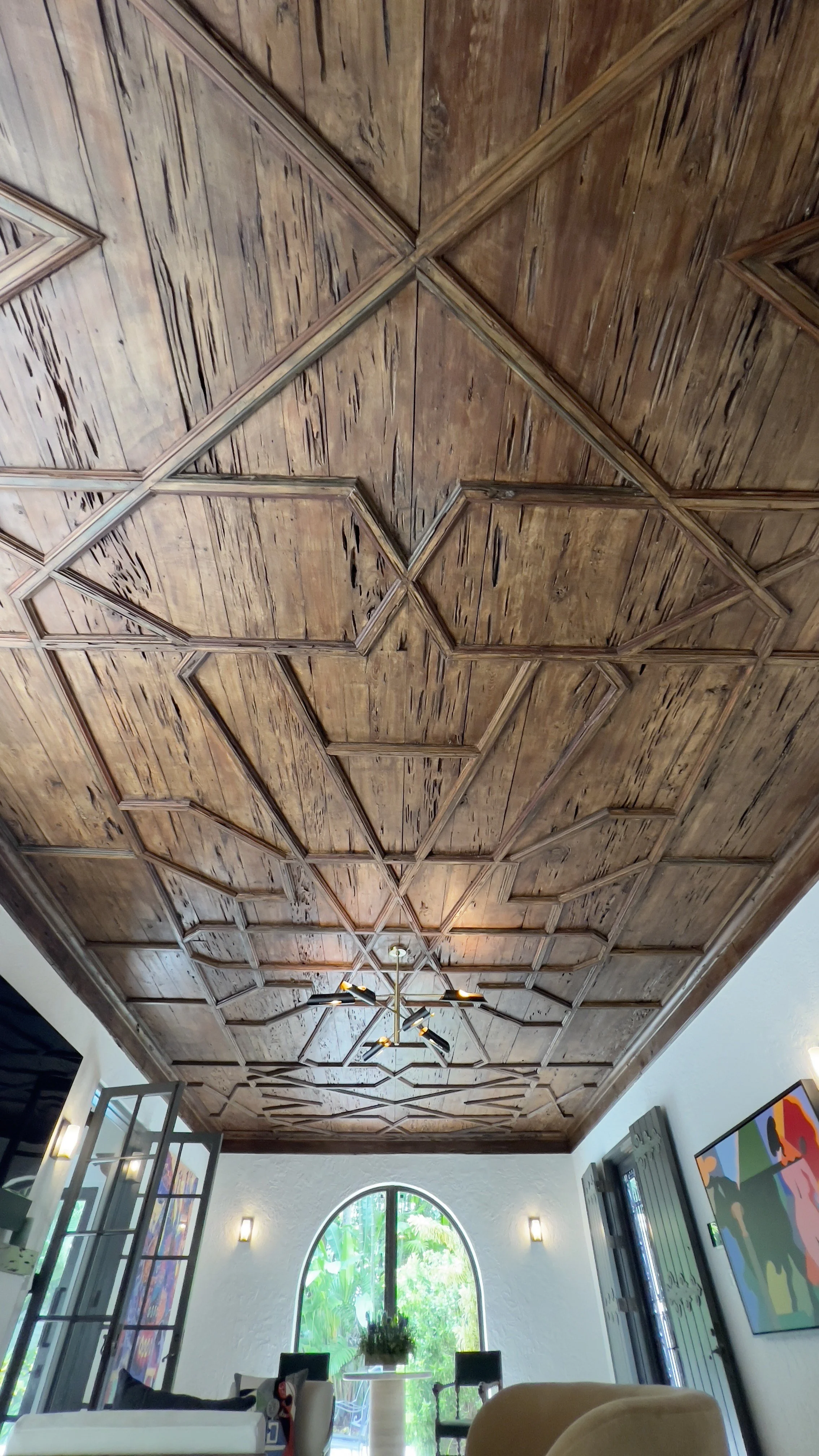
A historic ceiling restored with hand-applied wax, Miami, FL. Image courtesy: Austin Kerr.
Is wax the unsung hero of furniture restoration? This seemingly inert substance has been quietly working its magic for centuries, and in many cases, is still the best option for putting a protective finish on an object, whether metal, ceramic or wood, old or brand-new. As a restoration specialist in the field of contemporary design, I’ve learned that wax isn’t just a material—it’s a whole experience.
From the rich fragrances of French and Italian waxes to the satisfying moment when a dull surface comes alive, wax combines the practical and poetic. It enhances the natural beauty of wood, adding both visual warmth and a layer of protection, making the piece look refreshed without losing its history. Wax’s versatility extends to other materials as well, like metal and ceramics, making it a go-to for a variety of restoration needs. Though it can be brought to a high polish, often it works quietly in the background, ensuring that the focus stays on the piece itself, not on the finish.
There are many types of wax, each of which brings different advantages to the table. Beeswax is a classic choice with a rich history, used on wood furniture as far back as 3000BCE in ancient Egypt. Soft and organic, beeswax is perfect for maintaining wood and protecting the character of older pieces. Modern formulations are highly refined and favored for their conservation-grade quality. Personally, I’m partial to waxes from Italy and France, like Ambra’s LaCera Perfetta. It features a distinctive aroma derived from its natural components and essential oils, evoking Italy’s rich tradition in fine woodworking and furniture care.
Before waxing any object, the surface must be clean and smooth, free of old finishes or debris. This ensures the wax adheres evenly. I might layer wax for depth, buff it to a shine, or tone it down for a more understated finish. Depending on the texture of the desired surface, the wax can be applied with one rag, with another used to remove the excess and burnish the wax to a shine. If the surface is very textured, a brush might be used to apply the wax. The tricky part is preserving the character and history of the piece while giving it new life. Wax is the perfect material for this, adding just enough polish without erasing what was there.
While wax is versatile, it isn’t without its quirks. Take Renaissance Wax, for example. Technically a microcrystalline wax, a modern formulation derived from a petroleum derivative. It was originally formulated for use on metal objects in the British Museum, and the company that manufactures it bears a warrant from the crown. Despite its reputation for quality, though, it can sometimes be inconsistent. On raw, unsealed polished brass, it tends to build up unevenly leaving an irregular textured sheen, and can occasionally leave a faint yellow patina. Achieving a perfect finish with synthetic waxes requires a careful, practiced touch.
Another challenge is meeting expectations. Many clients want the benefits of wax—protection and durability—without the sheen. Striking this balance can be tricky but rewarding. Environmental factors like humidity can affect the longevity of a wax finish. In Miami, where I’m based, this is always top of mind. One of my own most memorable restoration projects involving wax was a historic home in the city, built in the 1920s. The Pecky Cypress ceiling in the living room had not been maintained, and it was in desperate need of care – dry, dull, and fragile. Using a combination of clear and brown wax (which has natural pigments, like raw umber, added to it) I was able to restore the ceiling to its former glory. The transformation was remarkable. The warm tones and natural textures of the wood came alive again, so much so that the ceiling became a centerpiece in its own right, “the soul of the house,” as the owners put it.
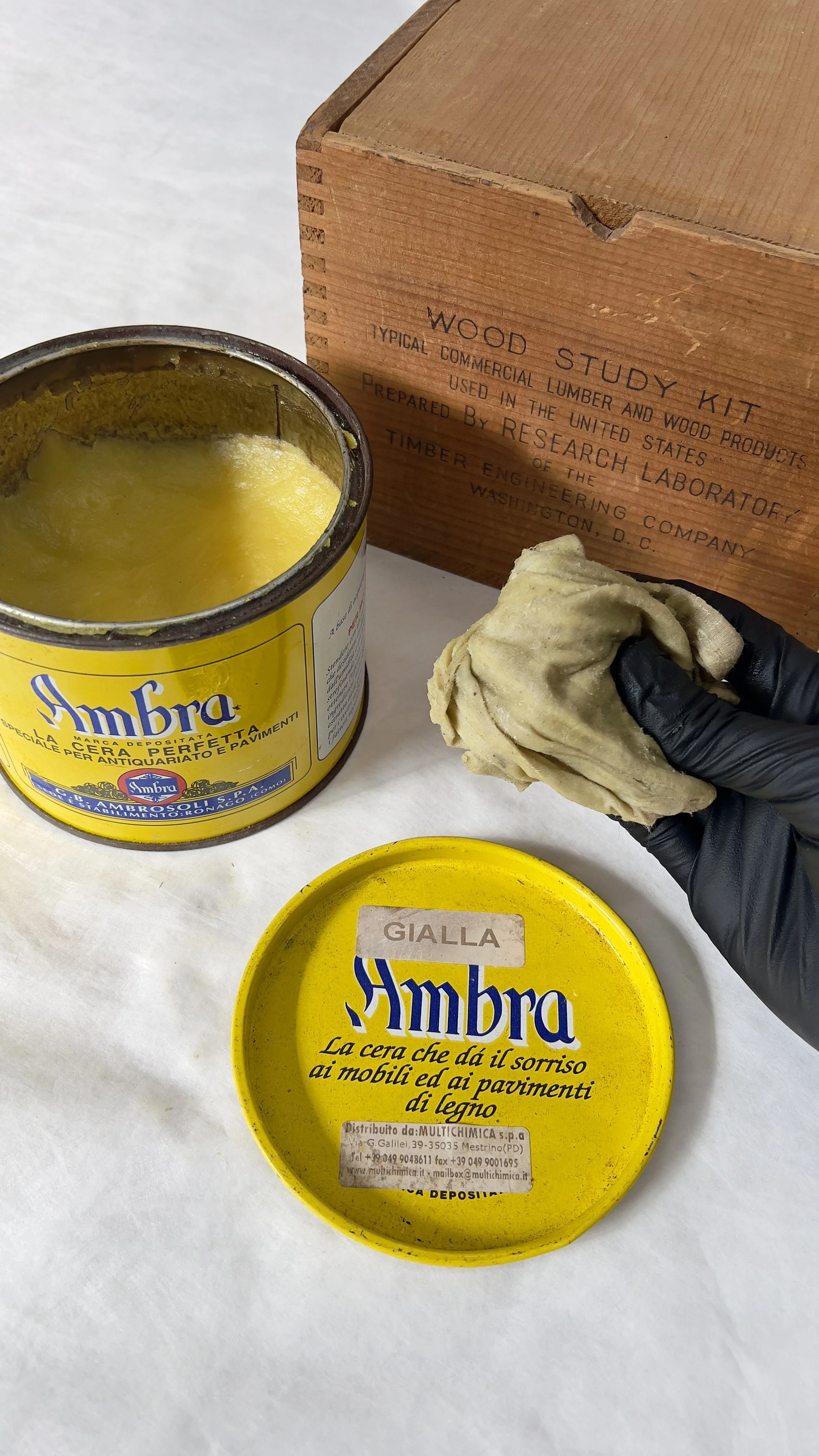
Image courtesy: Austin Kerr.
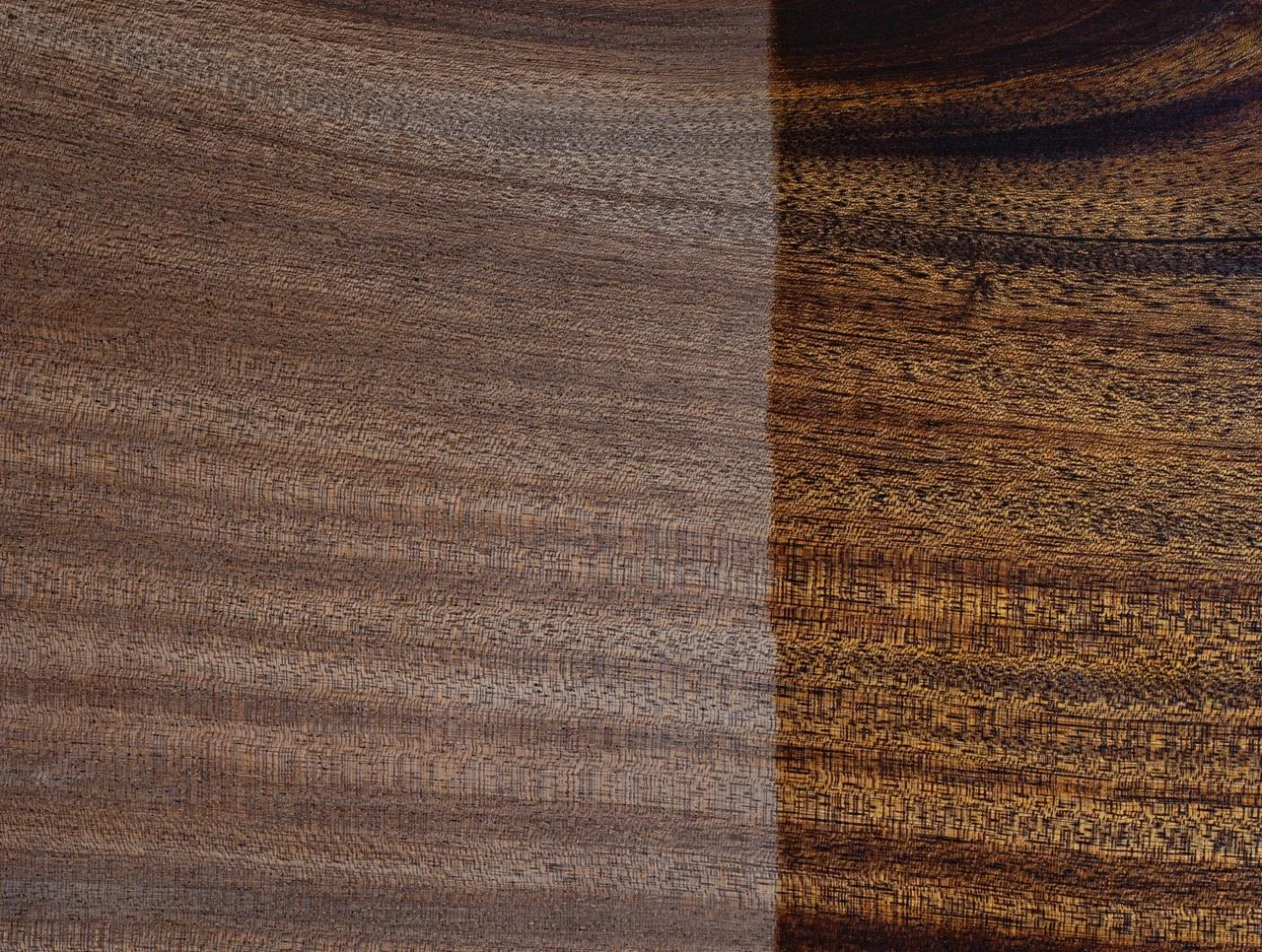
Unwaxed and Waxed Mahogany, 2025. Image courtesy: Jon Prown.