Season of the wick
Loren Wright
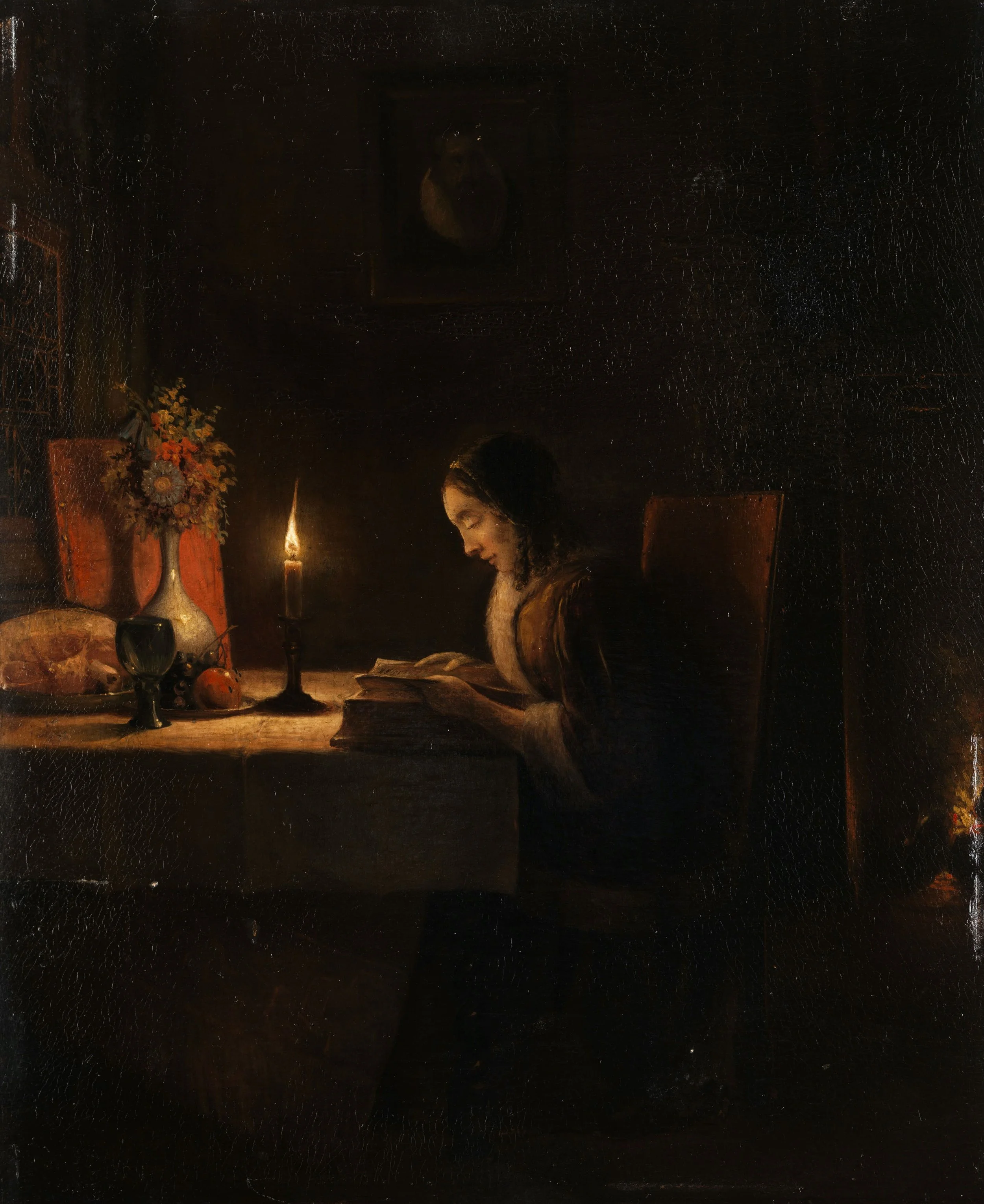
Petrus van Schendel (Dutch, 1806–1870), Reading by Candlelight, date unknown [ca. 1840s–1850s]. Oil on wood. 10 5/8" x 8 7/8". Hampel Kunstauktionen/Wikimedia Commons/Public Domain.
In 1847, Scottish chemist James Young took a lease on a coal mine in England that had a natural seepage of petroleum – literally, “rock oil.” Though the material had been used around the world for millennia, both as a sealant and a fuel, the petroleum industry was still in its infancy. Young didn’t know what he was working with. He began experimenting, first distilling a thin lamp oil, then a thicker oil that could lubricate machinery. Within a year he had set up a small refinery. Young noticed that the oil was dripping from the sandstone roof of the coal mine and theorized that it somehow came from heating the coal. He succeeded in producing a fluid resembling petroleum by distilling cannel coal, which is especially rich in oil, at a low heat. By slow distillation, this fluid further produced a number of useful liquids–one of which was paraffin wax.
Paraffin is odorless, colorless, and burns cleanly and reliably, making it an ideal material for candles. For centuries, the candlemaking industry had relied primarily on tallow—rendered animal fat. Tallow candles smelled foul, smoked obnoxiously, and attracted vermin when stored, but they were affordable and could even be made at home. Beeswax candles burned cleaner and lasted longer, but were prohibitively expensive, and so were used for mainly religious purposes, and by the very wealthy. Spermaceti candles, introduced in 1750, were even better, but the whaling industry had a short lifespan. An everyday alternative was needed.
Young’s discovery in 1847 was in fact a rediscovery. Paraffin wax had been discovered some years before by noted German chemist Karl von Reichenbach. It wasn’t until Young learned that paraffin is a byproduct of oil distillation that it became easy to produce. With the addition of stearic acid to raise the substance’s low melting point, modern paraffin was perfected.
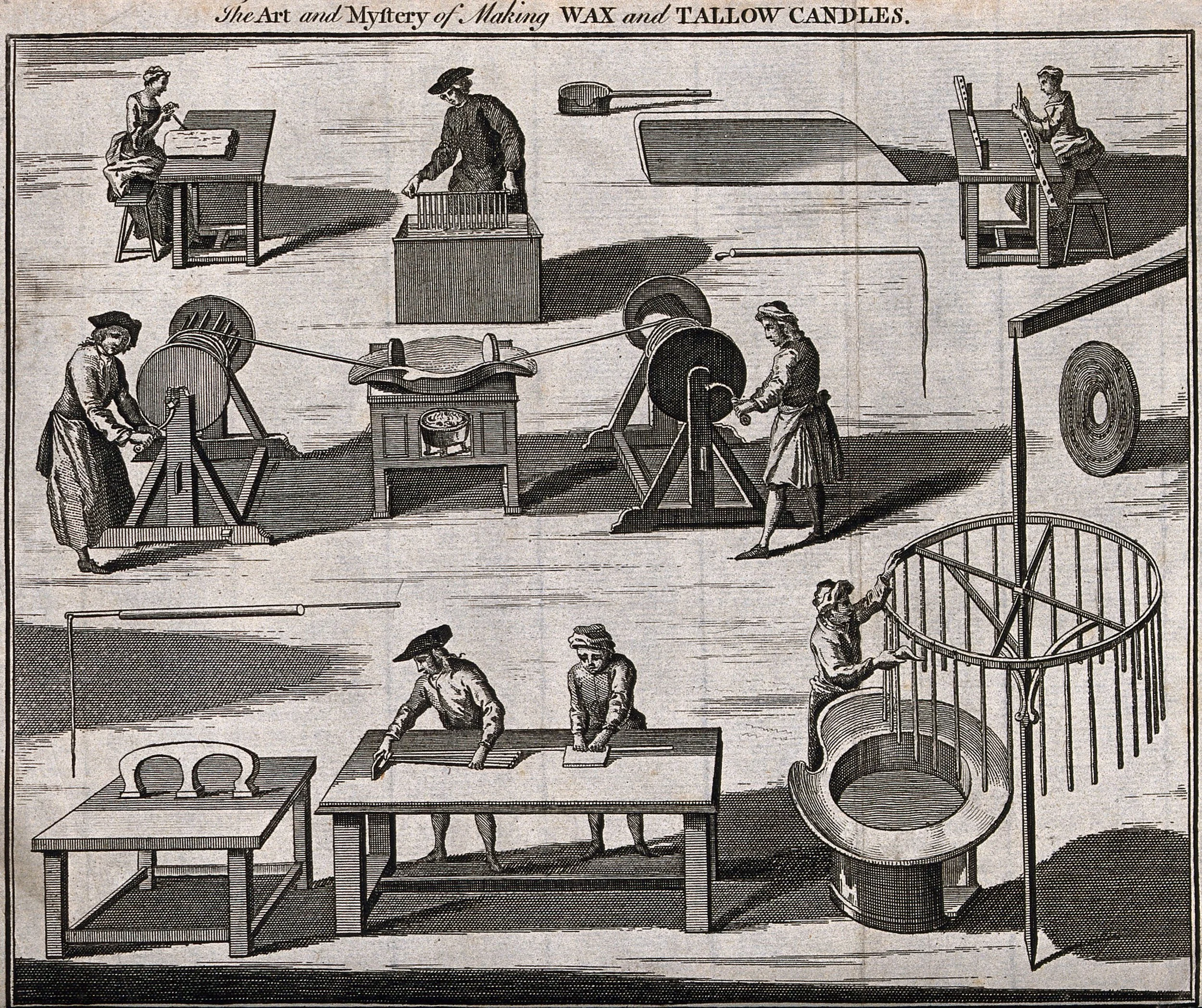
English, Various Stages in the Process of Candle Making and Machinery Used, 1700–1799. Engraving. (image): 7 1/16" x 8 11/16". Wellcome Collection.
At that point, candles had already been industrialized. In 1834 an Englishman named Joseph Morgan had patented a candlemaking machine that continuously produced candles from a mold. A workshop could make hundreds of candles in a day, so they were much more affordable. Now, the perfect material arrived to make use of this process. The candlemaking industry briefly thrived.
Its moment in the sun was short, however: kerosene and kerosene lamps were soon introduced, and then, in 1879, the incandescent light bulb, brighter and more constant than candlelight, and with a much longer lifespan. Though candles did remain the cheapest and most accessible means of light for some rural areas, the new technology spread quickly; in the United States, virtually all homes had electricity by 1955.
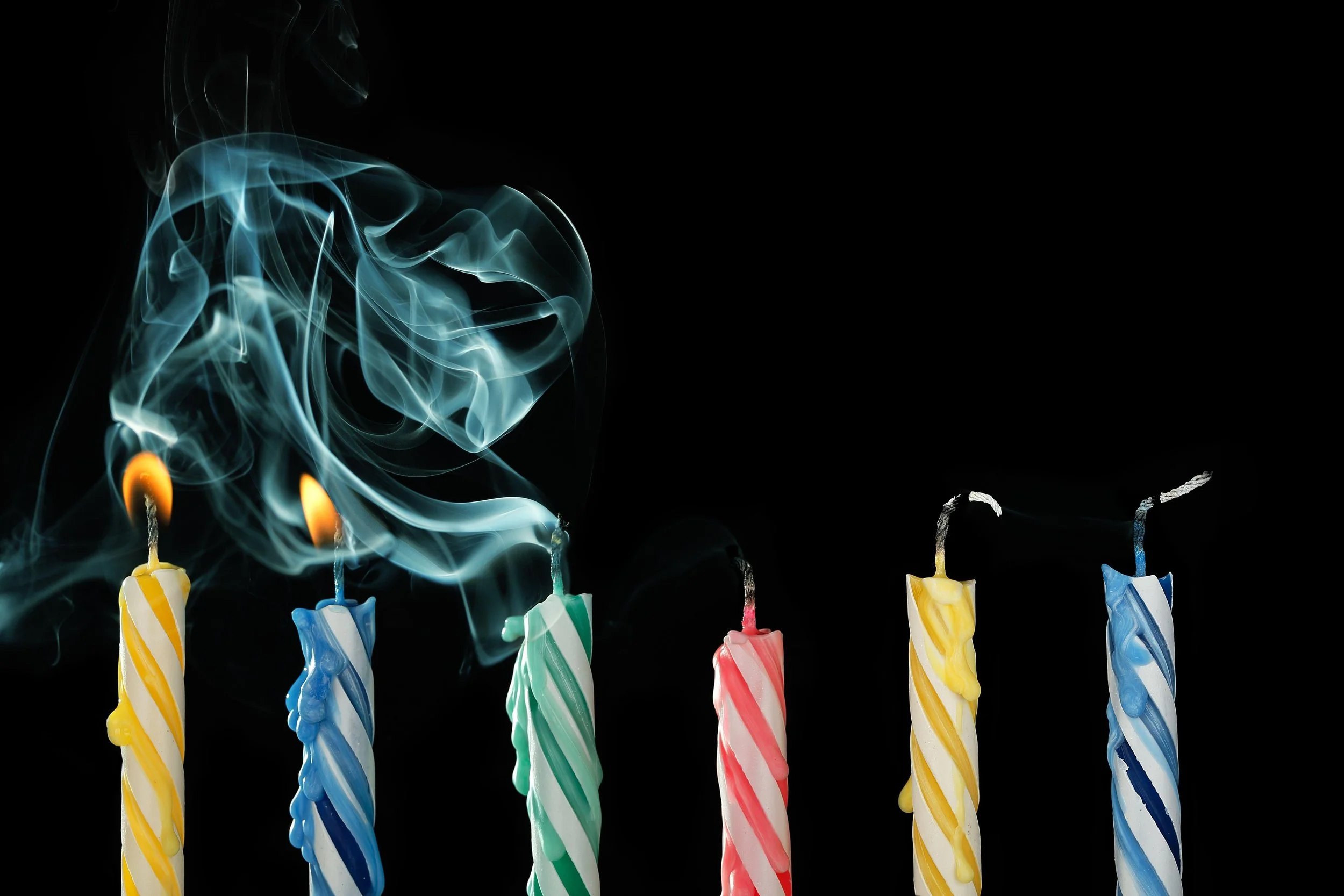
Birthday candles that have just been blown out with smoke on black background, March 19, 2015. Photo: Constantinos Zorbas / Alamy.