
Blankets for glaciers

Lauren Levato Coyne

Glaciers have been actively shaping Earth’s geography and climate for at least 60 million years. It’s only been the past two centuries that the process has reversed, as anthropogenic climate change has been melting ice caps and mountain top deposits. Scientists have studied these effects for a long time: In 1841, Swiss glaciologist Louis Agassiz made some of the first recorded observations about glacial erosion and melt, noting that when ice is covered with sand or chaff, it melts more slowly than when under direct sunlight. He was likely witnessing the earliest moments of our climactic impact.

Then, in 1856, American scientist Eunice Foote proved increased carbon in the air traps heat. She had formally discovered the greenhouse effect which is responsible for recent disasters, including the intensifying wildfires around the globe and catastrophic collapse of the Himalayan Langtang Lirung glacier in summer 2026. It all raises the question: can anything be done?

One possibility, somewhat counterintuitively, is to give a glacier a protective blanket. An early attempt at this occurred in 1947 when saw dust was spread over Switzerland’s Aletsch glacier’s popular man-made ice cave. But serious, large-scale attempts to cover ice bodies were only made possible through the development of geotextiles.

A common material in construction and landscaping, geotextiles are petroleum-based tarpaulins used for myriad purposes, including preventing erosion or managing water. In 1993, the first tarp was deployed at Zugspitze in Germany’s Bavaria region, covering 6,000 square meters.

Geotextile technology has improved since, with increased reflectivity that helps mimic snow’s ability to bounce light and heat back into space. Italy, China, Austria, and Armenia are among the nations blanketing their glaciers. In the relatively small areas that are covered it has worked, reducing melt by up to 50% in most cases.

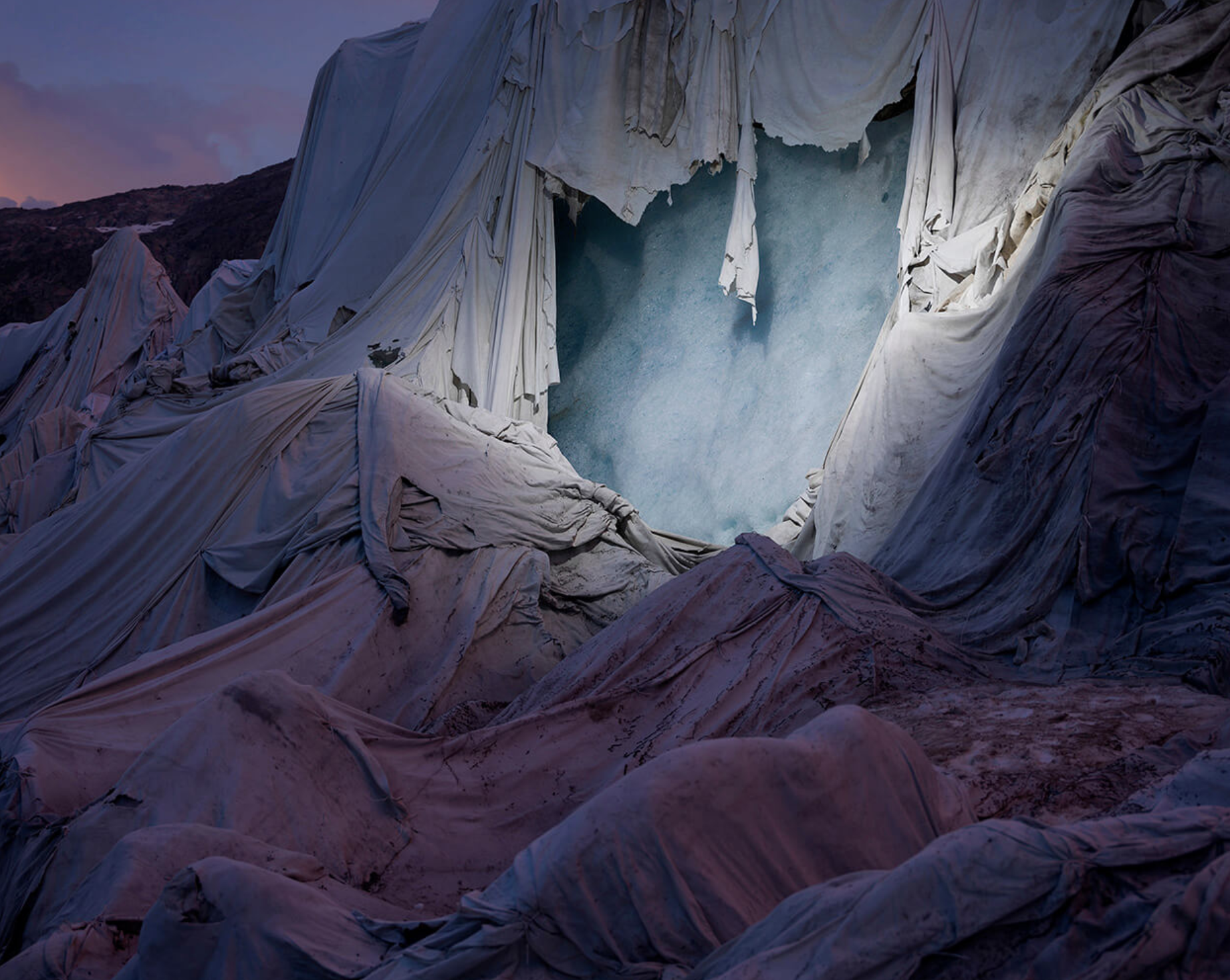
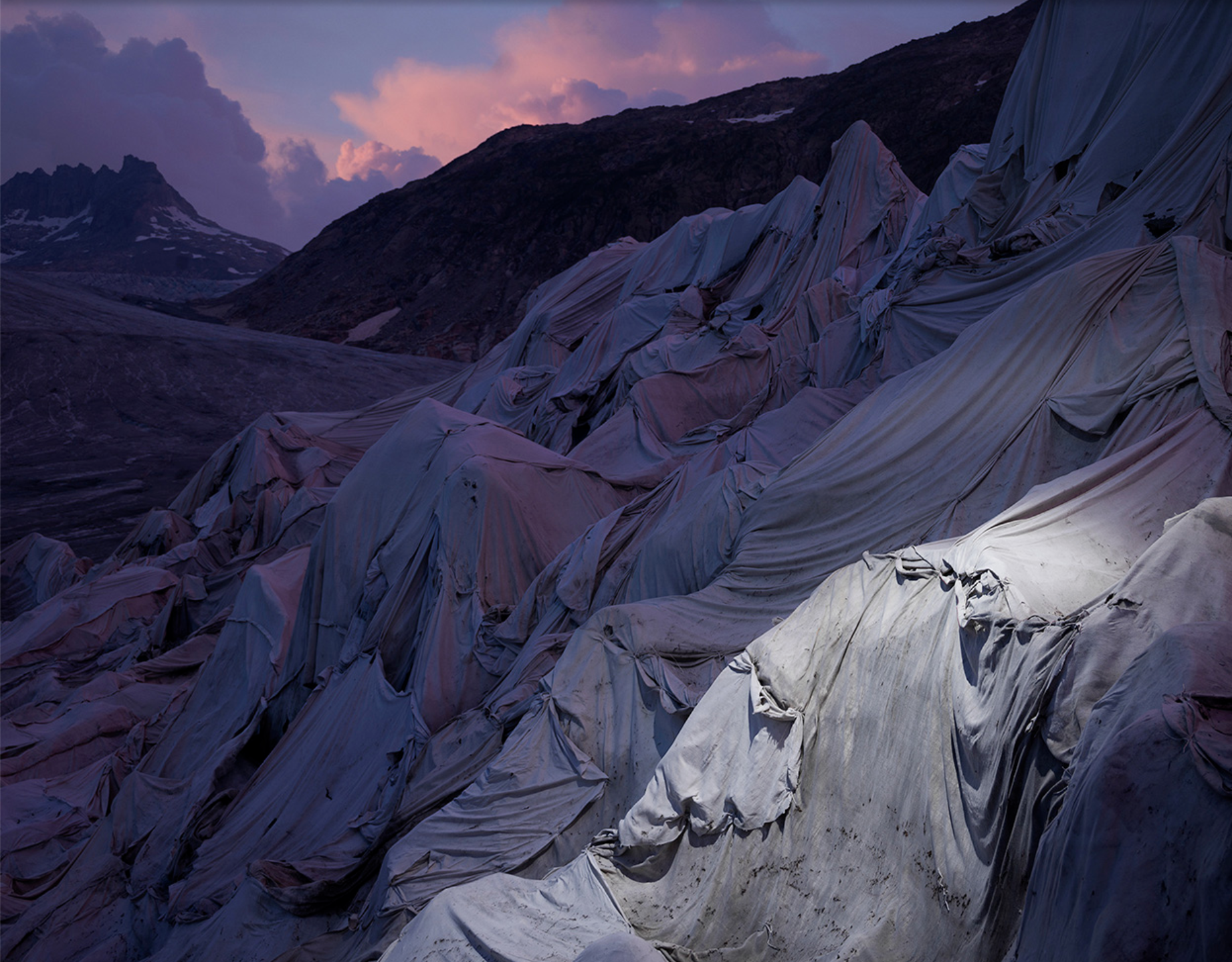
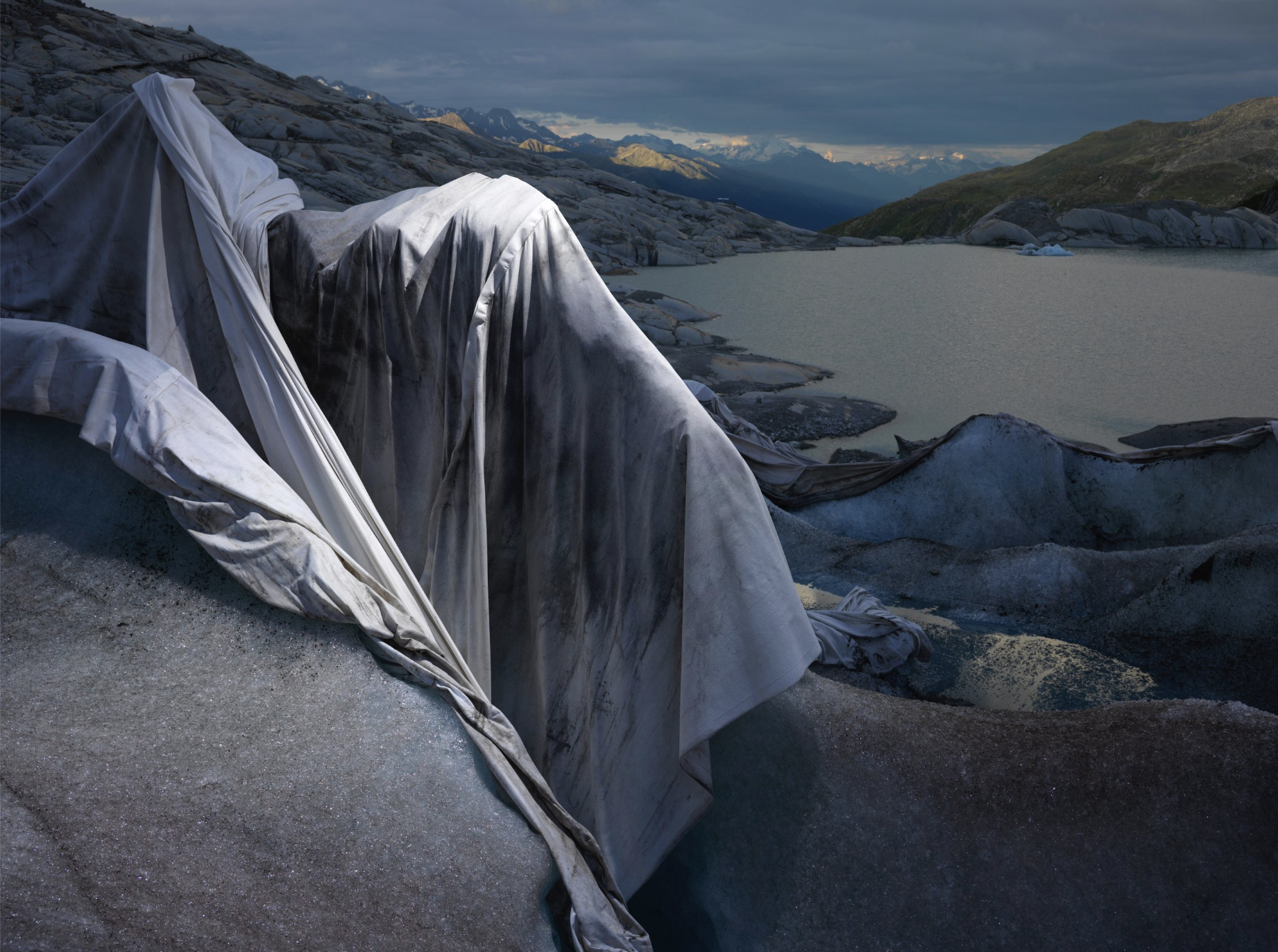
Switzerland’s Rhône glacier is one of the country’s most popular destinations. But tourist dollars aren’t the only thing on the line: the glacier provides fresh water to more than three million people and several thousand hectares of farmland. But it is rapidly shrinking, losing 1.5 meters of thickness annually, on average. Europe’s intensifying summer heatwaves recently eroded 4 meters in a single month.

Researchers began annually covering five acres of the Rhône glacier with reflective tarps back in 2010. The visual effect is haunting; comparisons to Michaelangelo’s carved marble Pietá have been made, though a more apt comparison might be to a haunted house. Photographers Simon Norfolk and Klaus Thymann have staged dramatic lighting on the draped ice, referring to the scene as a “shrouded villain.”

Glaciologist Mattias Huss at the University of Fribourg calculated the effort has saved 35 meters of thickness annually. He further estimates that if the country covered their largest 1,000 glaciers, it would save two thirds of the total annual volume loss—at a cost of $1.52 billion per year. The astronomical cost is not only fiscal, unfortunately; it is also environmental.

Synthetic geotextiles are made from polypropylene, polyester, and polyethylene, the most common of all plastics because it is both versatile and durable. More than 200 million pounds of the polymer are produced each year. But even tarps give way under the harsh conditions of glacial environments. This degradation results in plastic particles accumulating downstream in the ecologies and communities that rely on these glaciers. This microplastic contamination sent researchers looking for other material options.

Switzerland rears sheep primarily for meat, milk, and grazing, leaving most of the animal’s fleece as a waste product; up to 70% of the material is discarded or incinerated each year. So, in 2026, the University of Lausanne began experimenting with sheep’s fleece to create 10x10 meter blankets to cover a section of glacier in Vaud. Early results indicate that the material offers similar rates of protection as synthetics, with the benefit of being biodegradable and non-polluting.

Are any of these efforts sustainable over the long-term? In addition to the cost of producing the textiles themselves, blankets of all weights and sizes need to be installed, often by carting them up the mountain by hand. It is well documented that these coverings have preserved hundreds of thousands of cubic meters of snow and ice where they are in use around the globe, even as far more is lost annually. Swiss glaciers benefit from being some of the most intensely studied, which is how we know they have lost 40% of their mass in the past twenty years alone.

Currently, blankets only cover 0.02% of the country’s glaciers. While any effort makes a difference, there is a certain Sisyphean feel to it all. In the long run, radically reducing our carbon output is the only way to preserve glaciers and ecosystems alike. Meanwhile, we have some small security blankets to cling to.


Lauren Levato Coyne is an artist and writer living in the Berkshires. Her writing about art, gender, and ecology has received several awards including an AICA Irving Sandler Award for New Voices in Art Criticism and a Beauchamp Prize for Critical Arts Writing. Her writing can be found internationally in publications such as Antennae: The Journal of Nature in Culture, Brooklyn Rail, Sculpture, and others. She is the 2026 artist in residence at the Kinney Center for Interdisciplinary Renaissance Studies at UMass Amherst. Her research culminated in a solo exhibition titled Medusa’s Bestiary: Embodiments & Ecologies in which she speculates on what happened to the infamous Gorgon’s body after her head was stolen from her. Levato Coyne teaches drawing in the paleobiology and oceanography departments at Williams College as well as critical issues at the Rhode Island School of Design.

Brilliant Move

Brilliant Move is the Brooklyn-based creative studio of Marci Hunt LeBrun specializing in building websites on the Squarespace platform – among many other things.

I love working with small businesses, nonprofits, and other creatives to help them organize their ideas, hone their vision, and make their web presence the best it can be. And I'm committed to keeping the process as simple, transparent, and affordable as possible.

https://brilliantmove.nyc
Previous
Previous

Ice is dirt is ice

Next
Next

Icegiving