Leena Cho
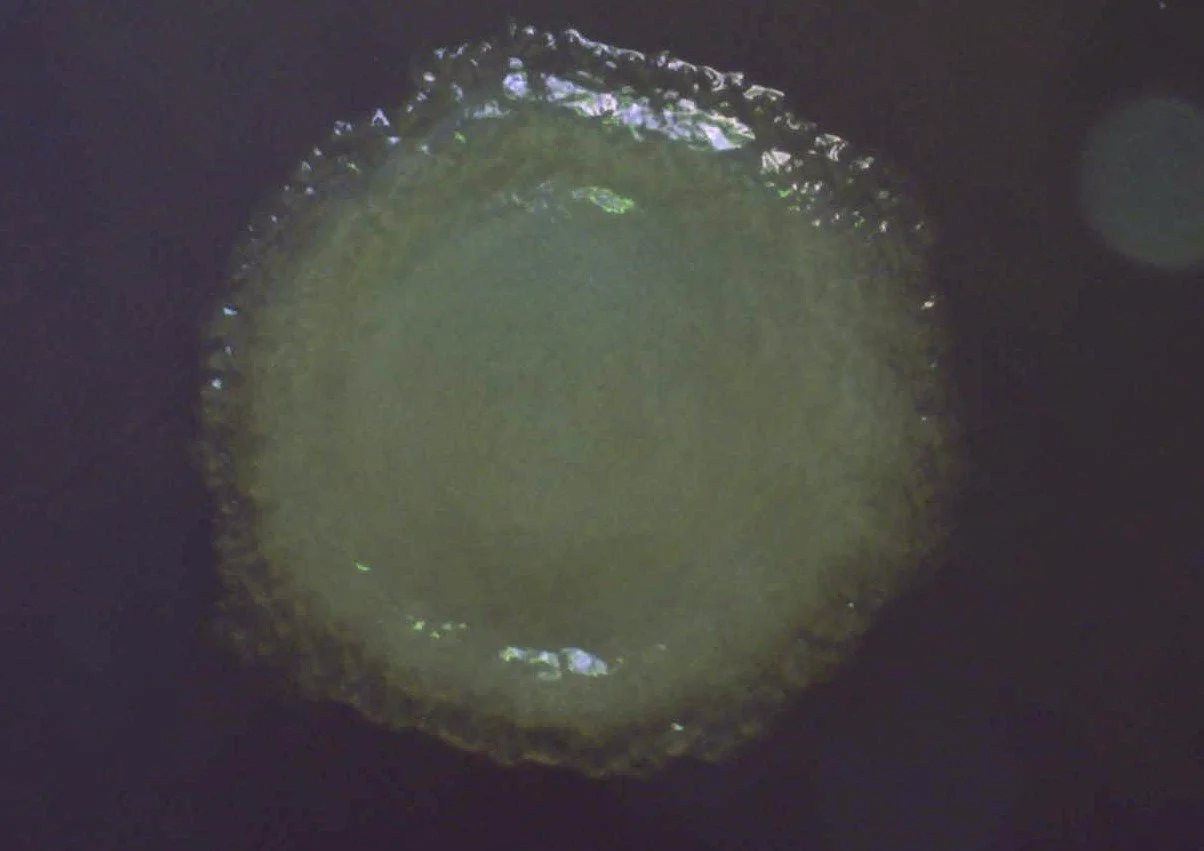
One of 26 new species of bacteria discovered in early 2026 in ~40,000-year-old permafrost in the tunnel.
Fox, Alaska. At the edge of an anonymous gravel parking lot, scattered with a few shacks, pickup trucks, and chain-link fences, an escarpment opens into a frozen subterranean world.
Excavated in the 1960s near Goldstream Creek, in the midst of a landscape shaped by mining, the tunnel lies about 15 meters deep and extends 110 meters horizontally into the ground. Originally built by U.S. Army engineers to test excavation and construction methods in frozen ground, the passage has since become a laboratory for permafrost research.
I have come to see what lies beneath the northern landscapes I study.
With a hard hat on, I enter. Cold, ventilated air arrives first. Then smell. In fact, it is the smell that stays long after, returning before any image of the tunnel does. Musty. Metallic. I think of the odorless methane in the tunnel, and imagine manure in Earth’s basement. Off-gas from decaying organic matter, sealed in frozen soil, slowly leaks into the air. Traces of ancient life once locked in ice and dirt brush through the hollow tunnel like a Sunday afternoon breeze.
I breathe in.
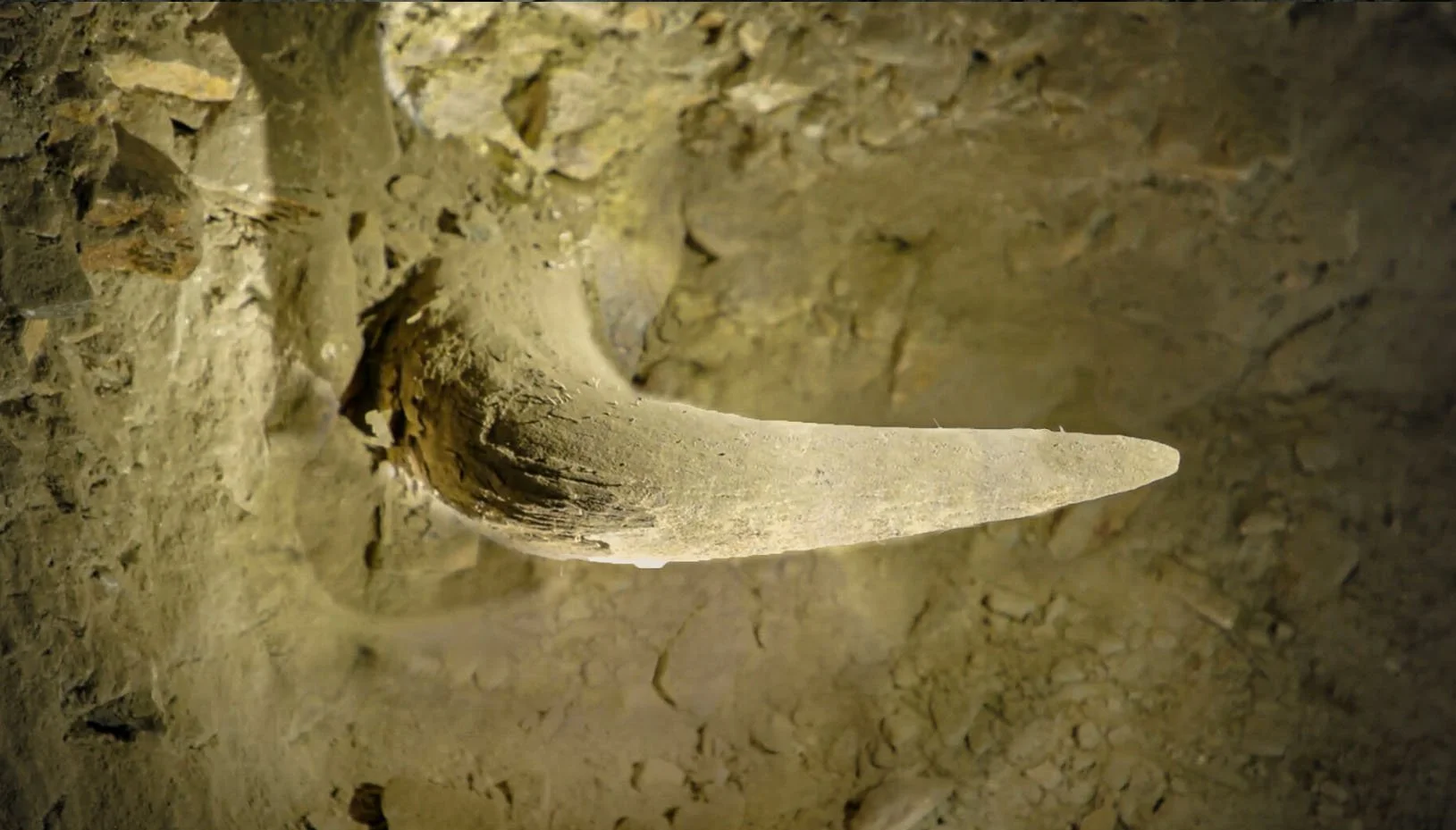
Fossil remains of a Pleistocene mammal. Bones of woolly mammoth and long-horn steppe bison have been preserved in permafrost for thousands of years.
As I walk down, any ordinary sense of sequence dissolves. Time stretches and folds with each step. Alder and birch pollen are suspended in a delicate, powdery ceiling of Pleistocene dust and frost. Sedges that fell into a pond some thirty thousand years ago are still intact and surprisingly green. Pale bison bones are lodged in the tan-gray wall, as if the animal had been interrupted mid-disappearance. Frozen ancient bacteria wait quietly to be woken by a thaw.
These fragments, exposed along the tunnel walls, inhabit the space and time of ice. They seem caught between death and life, and mingle with a human world of sweat and chatter. Ducts, vents, and diesel help keep the tunnel chilled at –4°C. Matter is enmeshed with frost, held in the deep cold, and preserved here in some slow, ongoing way at the crossroads of epochs.
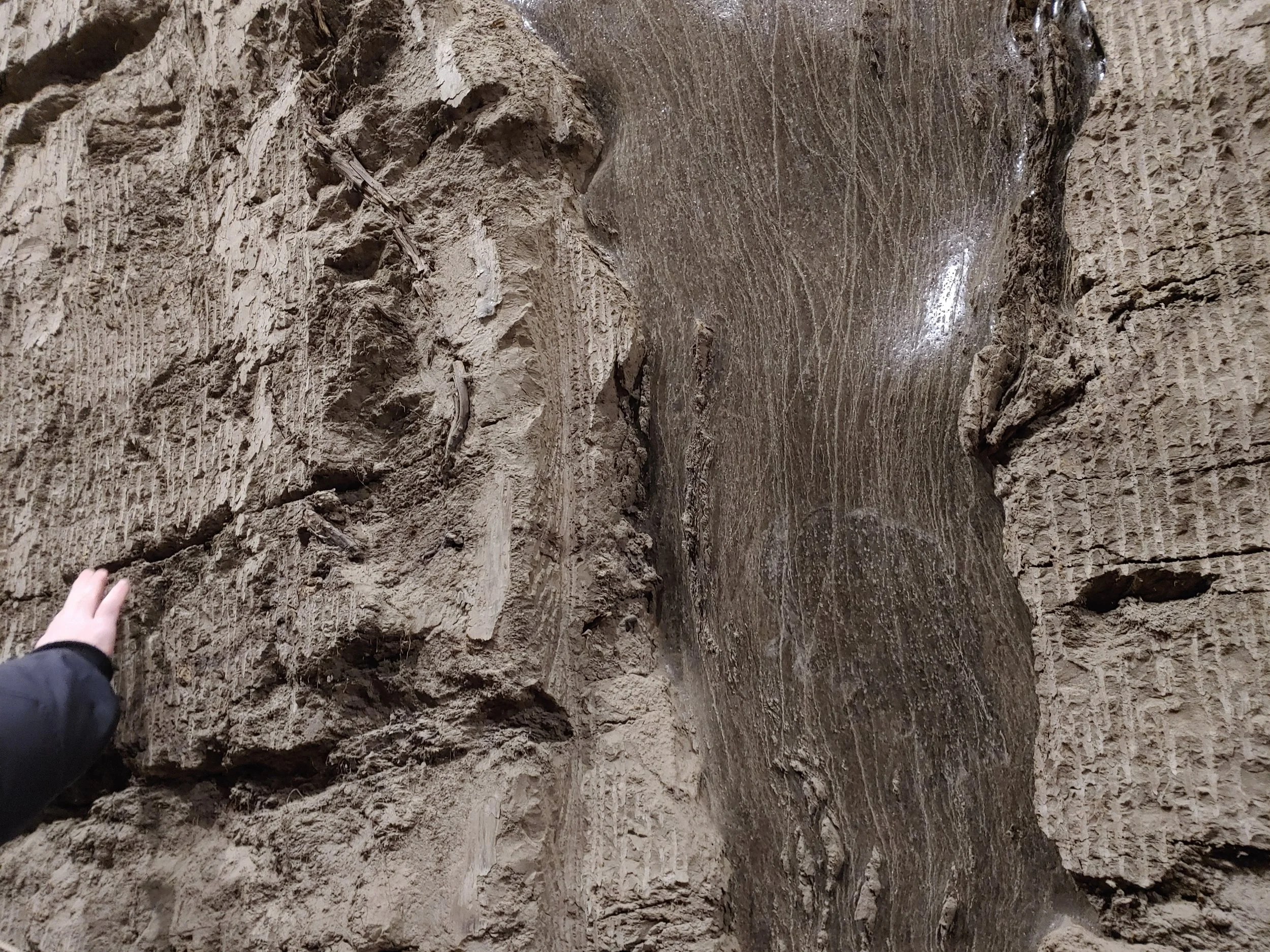
The wedges form over centuries of time from spring meltwater trickling down the cracks of freezing sediments.
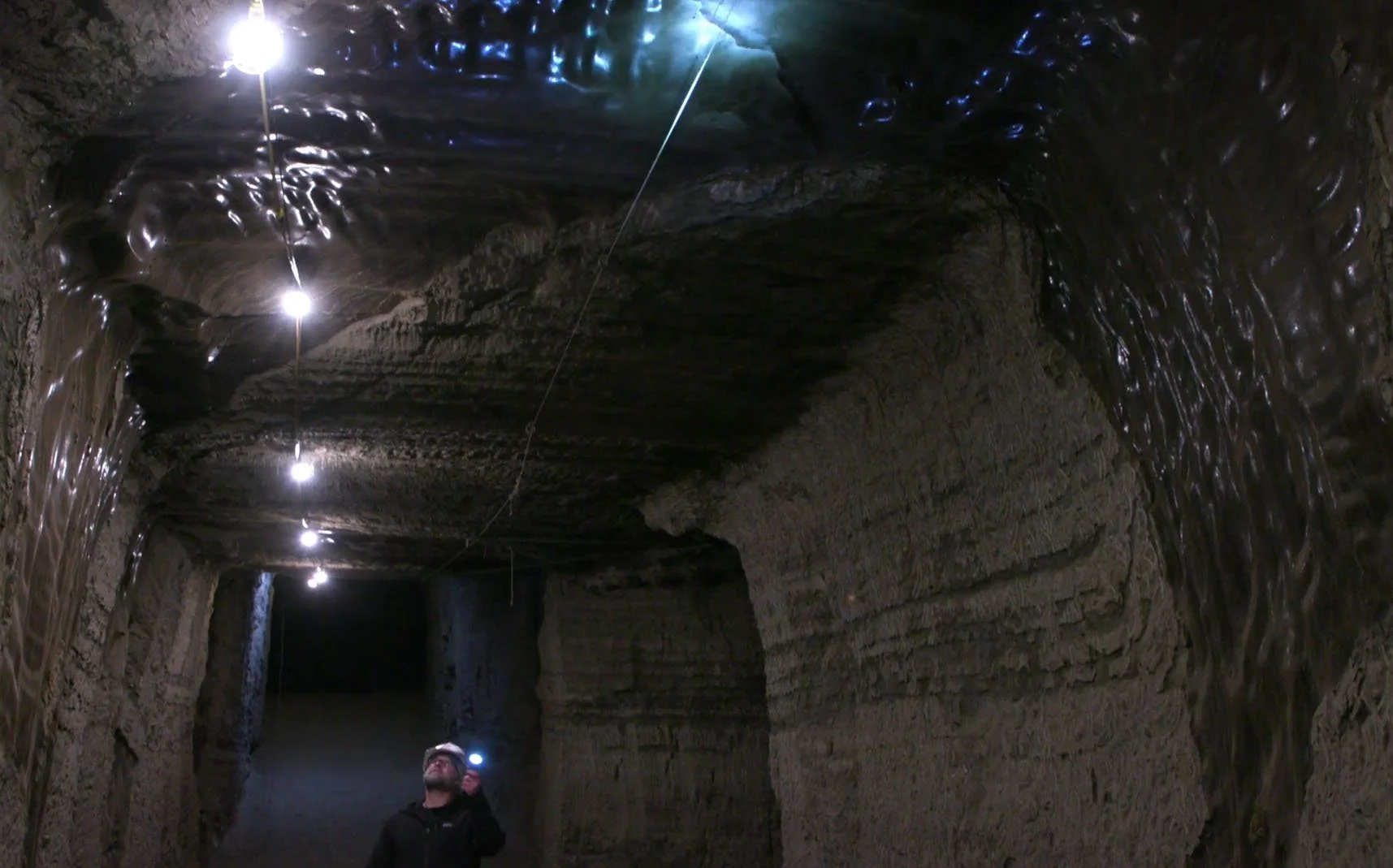
One large ice wedge extending on both walls and the ceiling, hollowed out by the tunnel excavation.
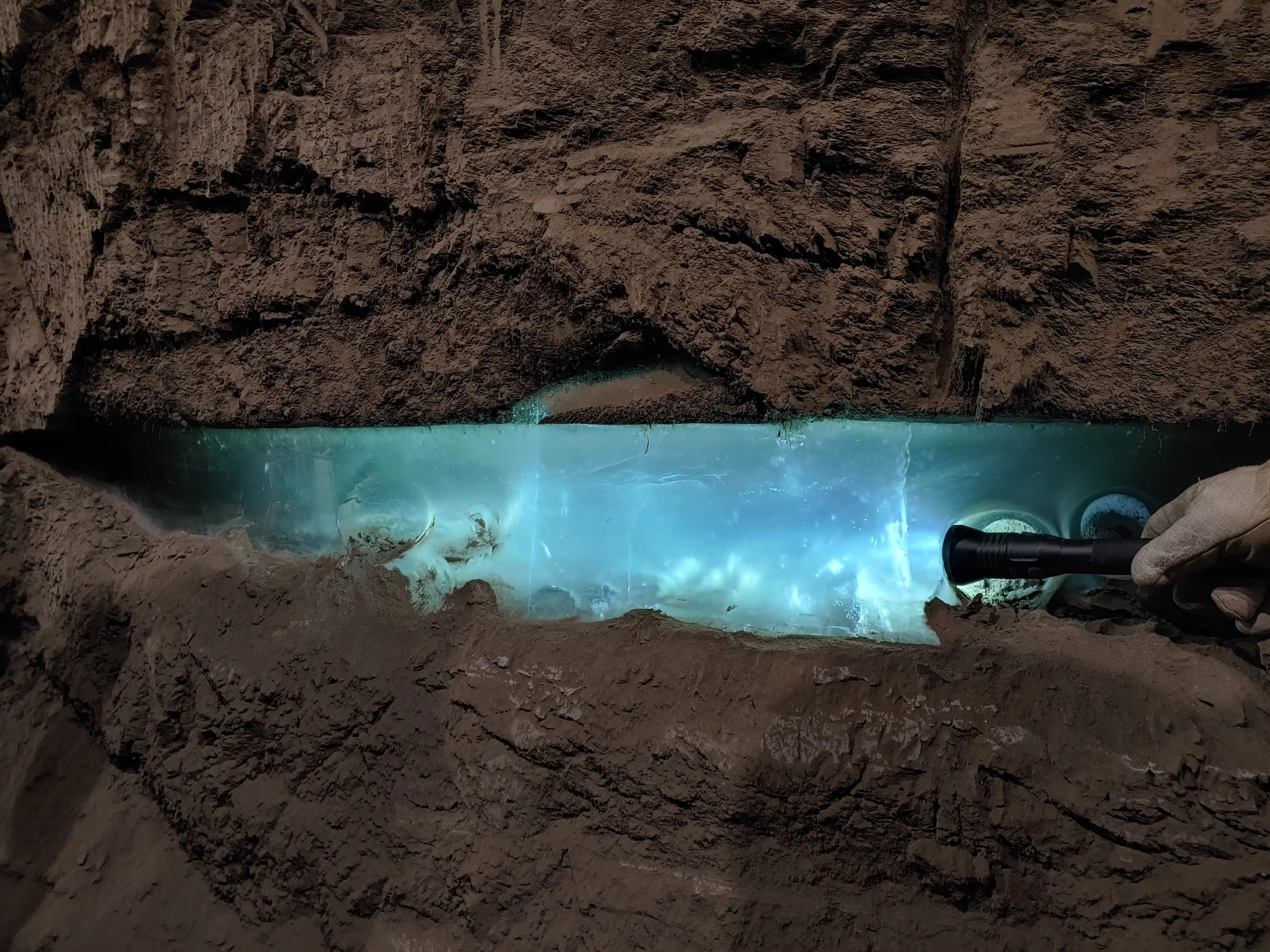
A rare pocket of clear ice formed by subsurface groundwater flowing through the ground in the tunnel thousands of years ago.
Ice is dirt is ice. In the tunnel, ice is not always a clear, shiny thing, not an object that can be separated from its surroundings. It is the frozen underground itself, accumulated over time. It is the smell, the machines, the bones, the grass. The slow sound of water solidifying in the dark. The sensors continually registering the tunnel’s critical temperature, and the liquid refrigerant keeping the cold alive. To think through ice is to exercise the temporal imagination.
Time speaks in textures. Ice fills pores, binds loess, and shapes the ground’s internal architecture. Grainy striations in the ice wedges hold layered constellations of air bubbles carrying climate histories—stories of the world we never saw and the time we never felt. The materials revealed in the tunnel do not originate from a single moment. They gather across many times, allowing different ages to remain beside one another long after they would ordinarily have separated.
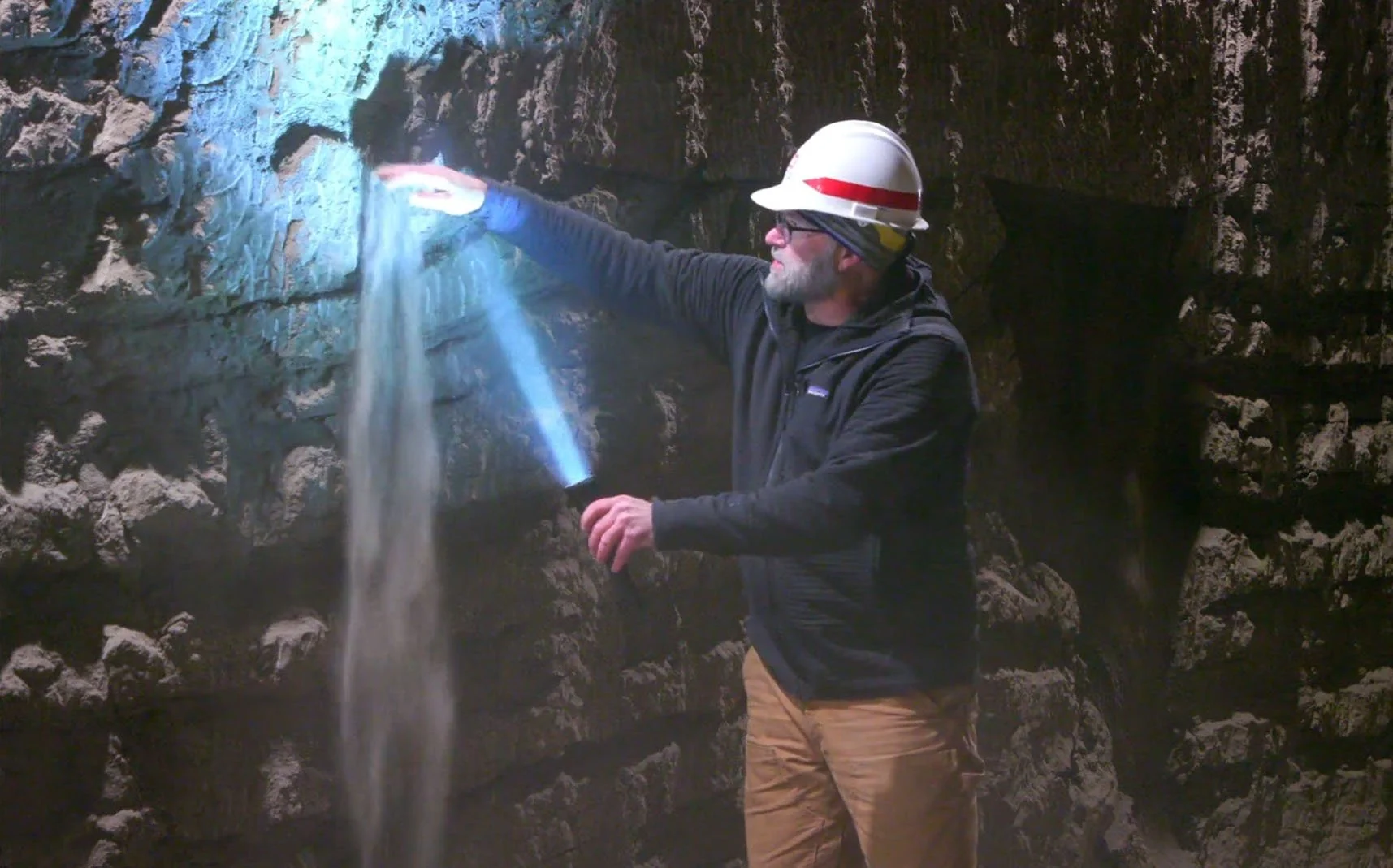
Most of the materials on the tunnel walls are loess, wind-blown silt from fine glacial dust, accumulated over ~40,000 years. It is light in weight and can easily fall off the wall or be suspended in air.
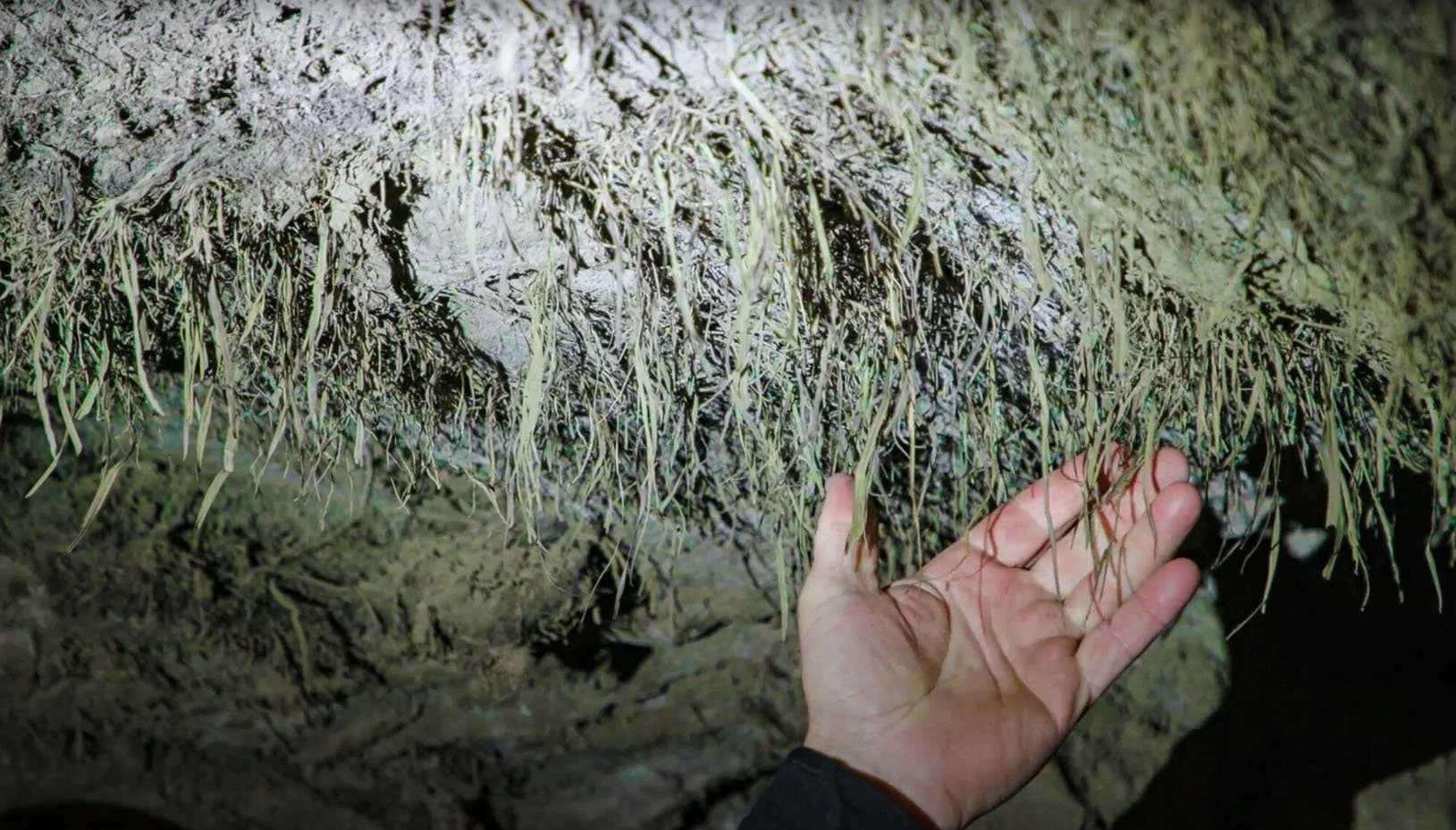
20,000-year-old green grass hangs off of the wall, still contains chlorophyll.