Many of us incorrectly assume that the technology of refrigeration and freezing is a recent phenomenon, dating back no earlier than the nineteenth century. Nothing could be further from the truth. Already in the first century A.D., ice and snow was harvested from the mountains outside Rome and hawked in the streets of the city in the hot summer months. There are also early references from the Middle East and China to the ancient practice of storing winter ice in deep pits for summer use, probably employed for chilling beverages and keeping meat fresh.
However, there is a huge difference between cooling a bottle in a bucket of ice and successfully freezing a liquid into a completely solid state. During the course of the sixteenth century a number of European alchemists succeeded in achieving the holy grail of artificial freezing by adding various chemical salts to a slush of ice, notably saltpetre (potassium nitrate) or common salt. This dramatically reduces the effective temperature of the ice, causing an endothermic reaction which pulls heat from surrounding materials. By placing a container filled with liquid inside the adulterated ice water, a rapid method of freezing is achieved.
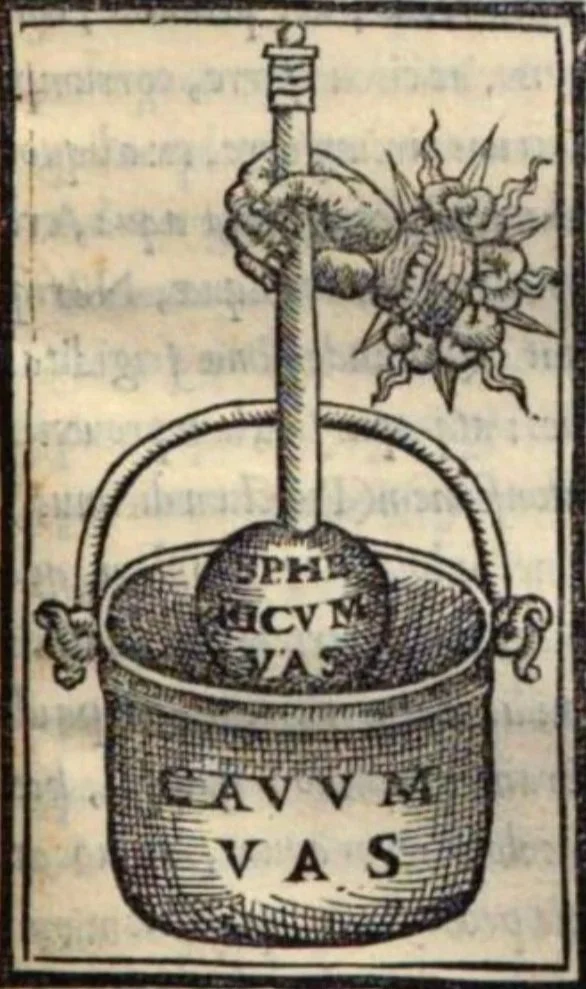
The earliest known pioneer of this approach was the Spaniard Blasio Villefranca, who published a diagram to illustrate the process in 1550. Villefranca’s woodcut shows a sphericum vas (spherical vessel) containing the liquid to be frozen, which is being agitated in a cavum vas (hollow vessel) filled with a mixture of ice and saltpetre. One of Villefranca’s contemporaries, the Neapolitan Giovanni Battista della Porta, similarly described how he could use the process to freeze wine into a glacial slush or solid.
Eventually this alchemical party trick was used to create the very first sorbets and ice creams. Recipes and directions started to appear in the second half of the seventeenth century, the earliest surviving in a handwritten manuscript compiled by the English aristocrat Lady Anne Fanshawe in the 1660s. Her instructions for making ‘icy cream’ fail to mention the essential salt (or saltpetre) which was added to the ice to effectively freeze the cream and sugar mixture. Fanshawe was the wife of the English ambassador to the Spanish royal court and probably saw ices being made while resident in Madrid in the 1660s. She may not have noticed the salt being added.
By the later decades of the seventeenth century, more and more recipes appeared in print for these so-called sorbetti. One anonymous pamphlet published in Naples in the 1690s, contains twenty-three recipes—some with surprisingly interesting ingredients, such as candied pumpkin, pinenut comfits, ambergris, cream of cinnamon, chestnuts and muscatel grapes. There are also recipes for chocolate, strawberry and sour cherry sorbetti.

 Brilliant Move