
Never-melting snowmen

Emily Madrigal

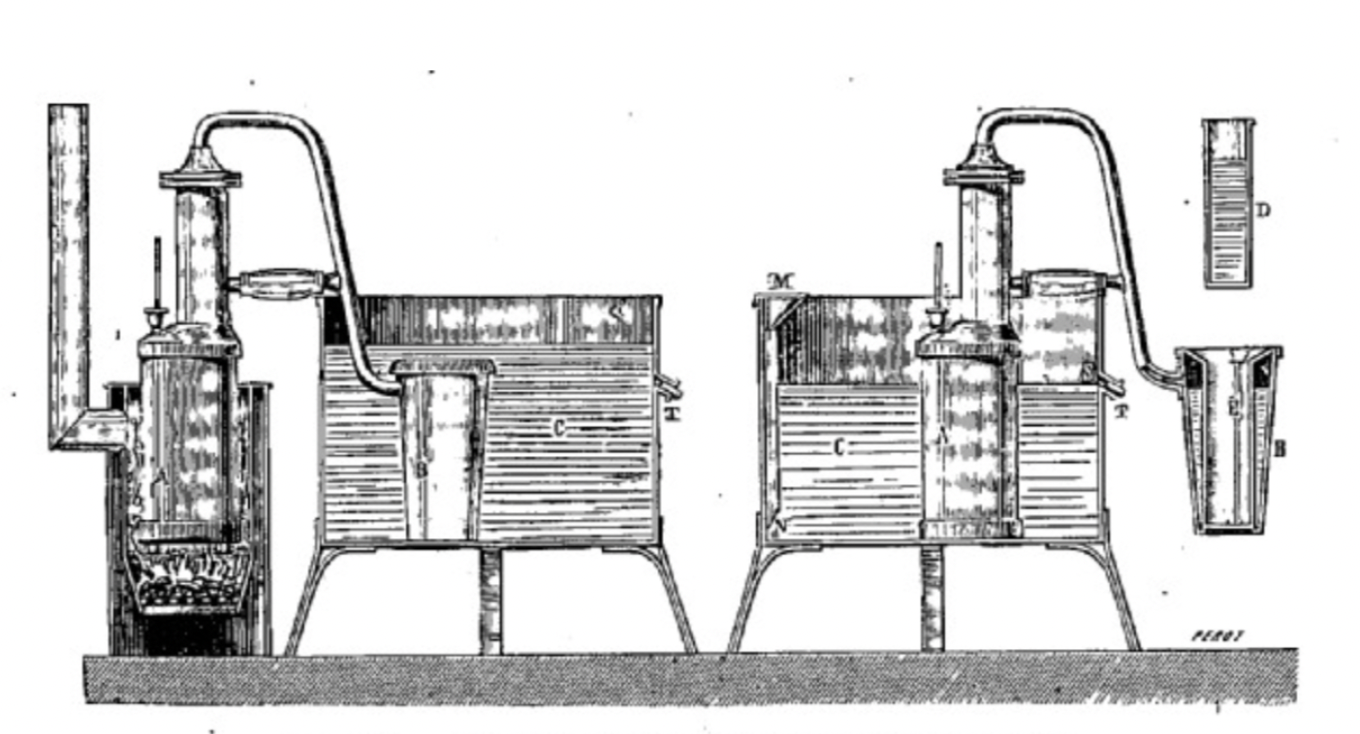
In 1893, the French artist Pierre Roche (1855-1922) tried to invent a new kind of sculpture: a snowman that would never melt. Recent developments in science and technology had made this possible. At the Universal Exhibition in 1862, a French engineer named Ferdinand Carré had presented the first functional and practical ice-machine, which used liquefied gases to continuously produce frozen cubes. Roche, seeing the frost-covered gears on the back of the machine, thought to adapt this mechanism towards large metal statues. A refrigerating apparatus installed inside the metal sculpture would produce and preserve a layer of frost upon its surface, causing the object to look as if it were made entirely of snow. 

Roche deposited two patents for this ingenious idea, in 1893 and 1896, and also published an article in 1897 titled “La neige et la sculpture.” He called snow “the most fragile of all substances, whose instability has hitherto made it nothing more than a child’s plaything—can today be transformed by science into the material for durable, permanent objects.” He did not get much further than that suggestion, though, and today, his proposal may seem little more than a curiosity. Yet it also arguably marked the culmination of a certain analogy at the heart of European sculpture. 

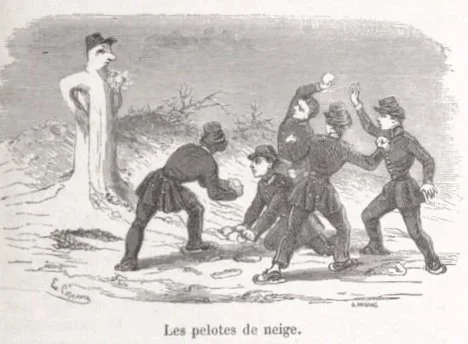
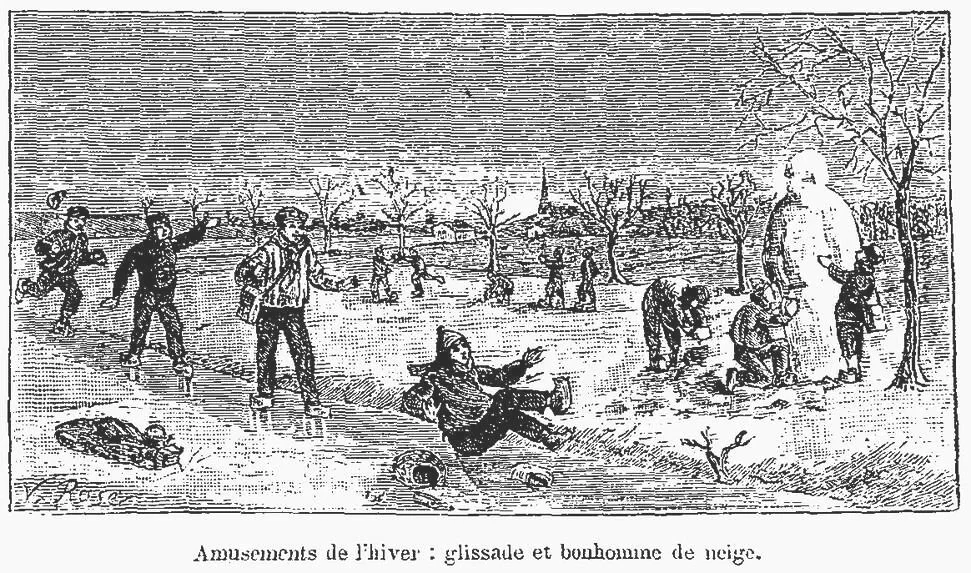
In the nineteenth century as today, snow was first and foremost seen as a material of children’s play, diversion, and marvel. In fairytales, such as those by Nathaniel Hawthorne or Jérôme Doucet, young protagonists bring their snow creations to life, magically animating the material like an arctic Pygmalion. Books on children’s games detailed the various forms of fun that could be had with snow: snowmen, sledding, snowball fights. Snow was easy to shape, lightweight, and self-adhering. 

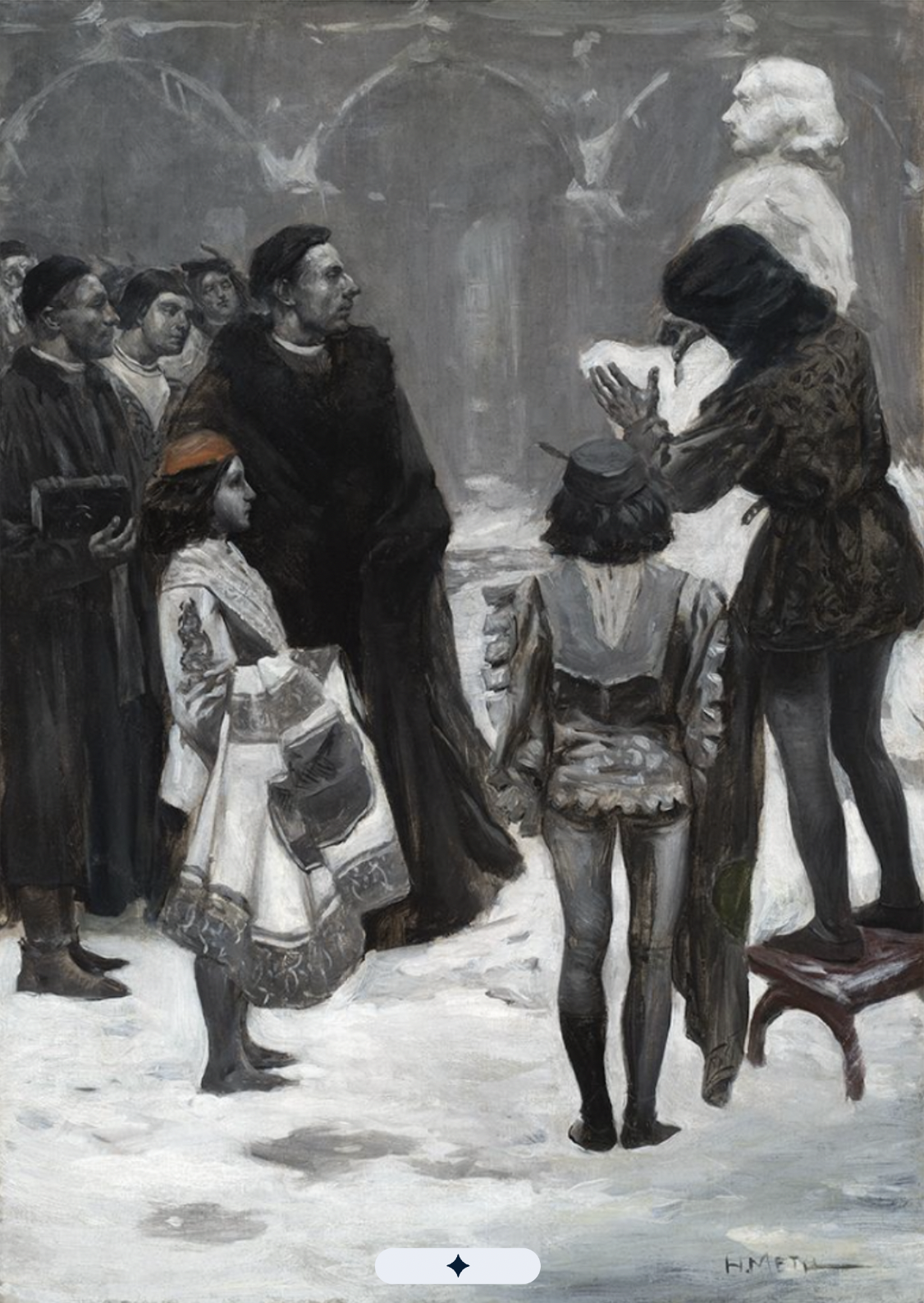
Children were not the only ones who took pleasure in modeling snow, however. In both his 1893 patent application and in the 1897 article, Roche emphasized that even the greatest artists of the Italian Renaissance were known to have worked in this ephemeral medium. According to accounts by Ascanio Condivi (1553) and Giorgio Vasari (1568), for example, no less a figure than Michelangelo made a finely sculpted snow figure when he was only about twenty that impressed Piero de’Medici. 

In such anecdotes, snow was clearly intended as a material foil to marble, sculpture’s most revered and lasting material—which it looked but did not feel like. This visual analogy could even be used to distinguish sculpture from other arts. Leonardo da Vinci, in the Codex Urbinas (published posthumously in the mid sixteenth-century), noted that sculpting is a physically exhausting and messy practice, unlike painting. To illustrate this comparison, Da Vinci explains that the sculptor produces so much dust while carving a marble block that he appears to have been covered in snowflakes—an evocative and familiar image. Marble doesn’t melt, of course, instead sticking tenaciously to the sculptor’s skin, clothes, and studio floor.

Intriguingly, this analogy can be found in reverse in reports from the eighteenth and nineteenth century, which record the creation of ephemeral sculptures in snow and ice. One such story took place in Paris in December of 1783. On one eve of that exceptionally cold winter, a snow monument was erected to honor Louis XVI for providing the people with food and other resources. A poem was inscribed on its frosty surface, noting that the king would surely understand that the grateful sculptors had used not marble but snow—the only thing available to them. 

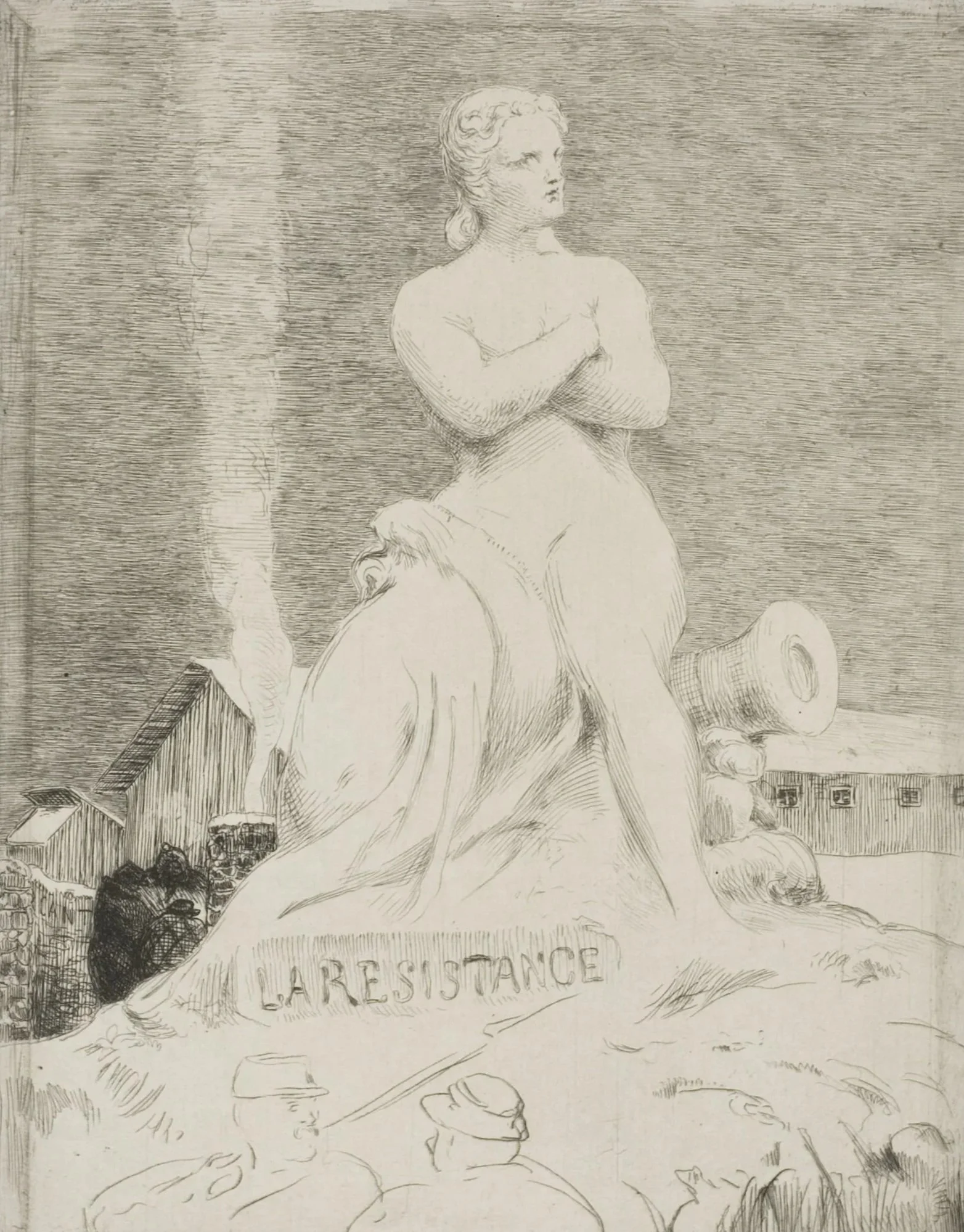
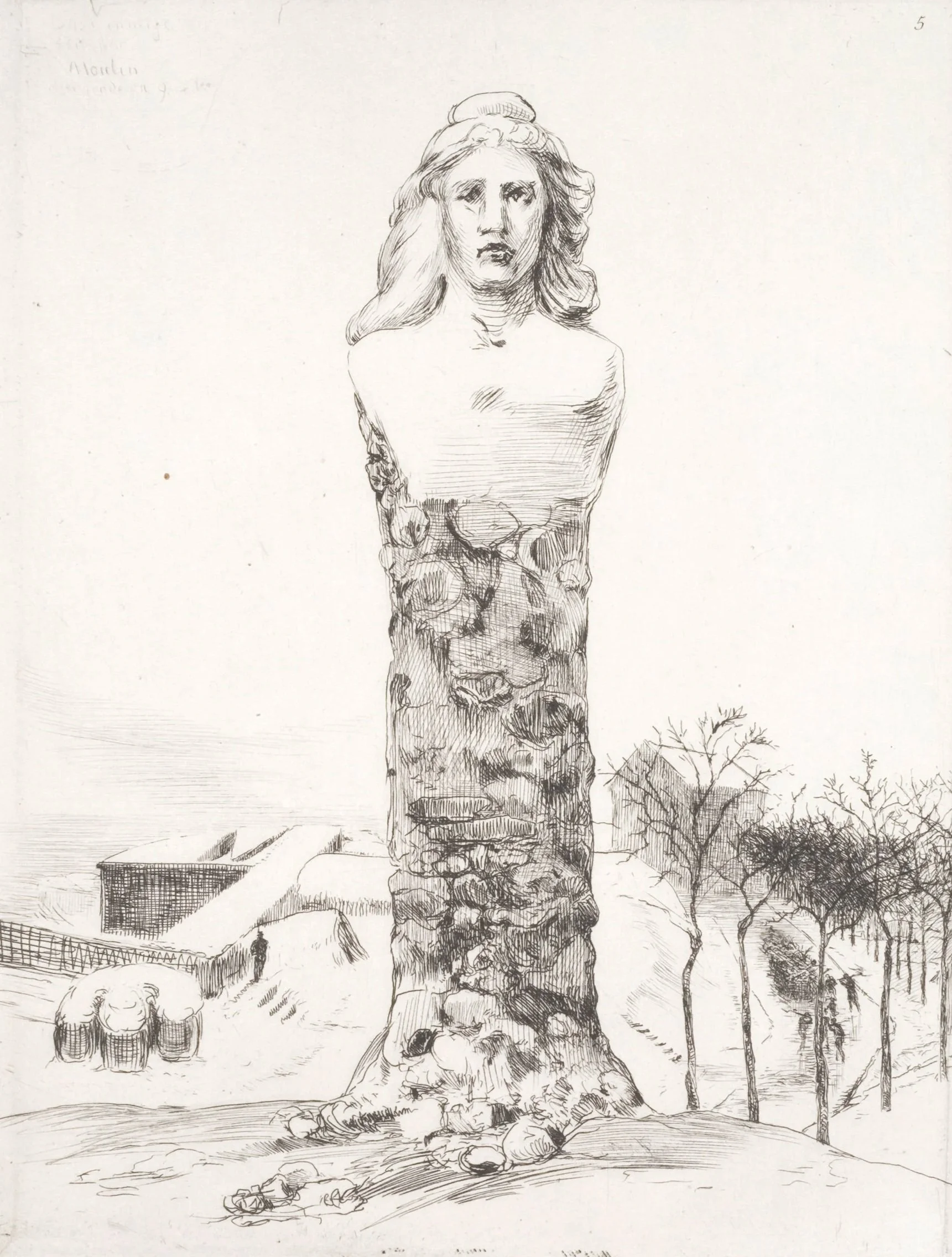
Another case occurred in Paris in December of 1870. Two sculptors, Alexandre Falguière and Jean Moulin, were stationed outdoors on the ramparts as the city was under Prussian siege. They decided to pass the time by shaping statues in the recently fallen snow. Falguière’s statue and Moulin’s bust personified the French republic and its resistance against the Prussians. The works were admired by other artists and art critics, including Théophile Gautier, who took interest in this “musée de neige,” describing its materiality as “Carrara marble which descends from the sky onto the earth in scintillating powder.”

Though typically seen as the stuff of children’s pastimes and winter divertissement, then, snow has also been an artistically significant and even monumental sculptural medium. While it resembled marble in its whiteness and surface quality, snow was far easier to work with, allowing for spontaneity and experimentation, and it was essentially free. The downside, of course, was that it was ephemeral; snow sculptures lasted barely long enough to be remembered. 

Though Roche’s invention publicized, apparently for the first time, the possibility of harnessing snow, sculptors throughout history had been drawn to this material. And his dream was finally realized, in a sense, by Peter Fischli and David Weiss. Their Snowman, first realized in 1987 and recreated in 2016, is a metal frost-covered sculpture powered by refrigeration technology—just what Roche had imagined. Smiling at us in its chiller, it makes for a poignant end to this story of evanescence. Sculptors have tried to work with this most fleeting of substances for a long time. But this history has left scarcely a trace, like so many ice crystals melting in the rising sun, or in the dawn of spring.


Emily Madrigal is an art history PhD candidate at the University of Virginia. She is currently a pre-doctoral fellow at the Leonard A. Lauder Research Center for Modern Art at the Metropolitan Museum of Art. Here, she is writing her dissertation, “Carving Pictures, Casting Color, and Painting with Glass: Sculpting in the Age of Statuemania”, which examines sculptural practices in late nineteenth-century France that used the byproducts and ephemera of industry. 

Brilliant Move

Brilliant Move is the Brooklyn-based creative studio of Marci Hunt LeBrun specializing in building websites on the Squarespace platform – among many other things.

I love working with small businesses, nonprofits, and other creatives to help them organize their ideas, hone their vision, and make their web presence the best it can be. And I'm committed to keeping the process as simple, transparent, and affordable as possible.

https://brilliantmove.nyc
Previous
Previous

Ice cubes galore

Next
Next

Frozen in time