
Ice cubes galore

Joana Albernaz Delgado 

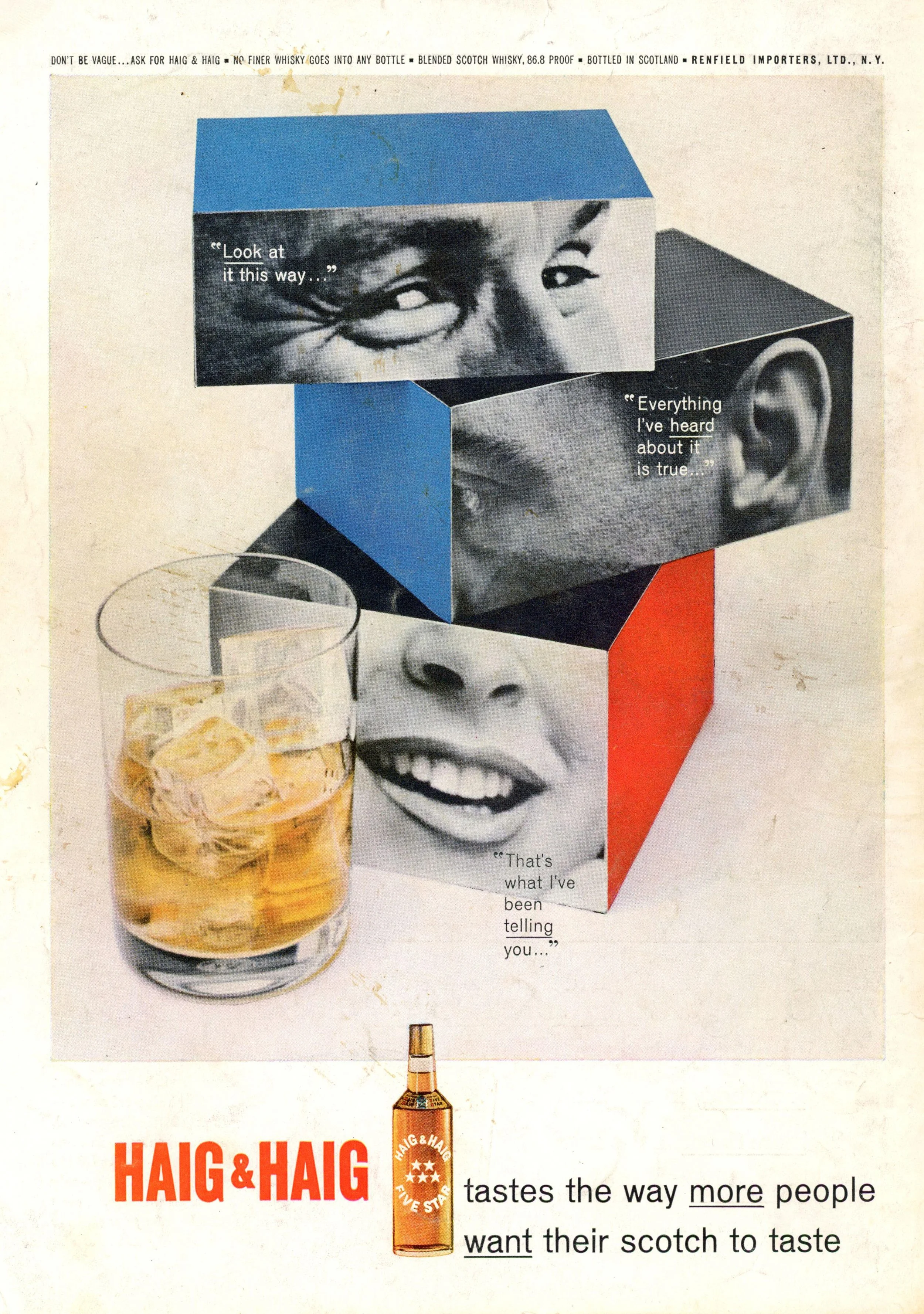
If you think water cannot be designed, think twice. Look at the ice cubes rattling in the drink you are (or could be) holding right now. Strange as it sounds, those ice cubes have a design history, which is not as instantly transparent as they are.

Ice was extracted from frozen lakes for centuries, for the purposes of shipping, industry, and domestic use. In the nineteenth century, some American kitchens had an icebox: a wooden cabinet for preserving food using harvested frozen slabs. But it was only with electric refrigerators that ice could be artificially produced inside the home—and so the idea of ice as a design problem began. 

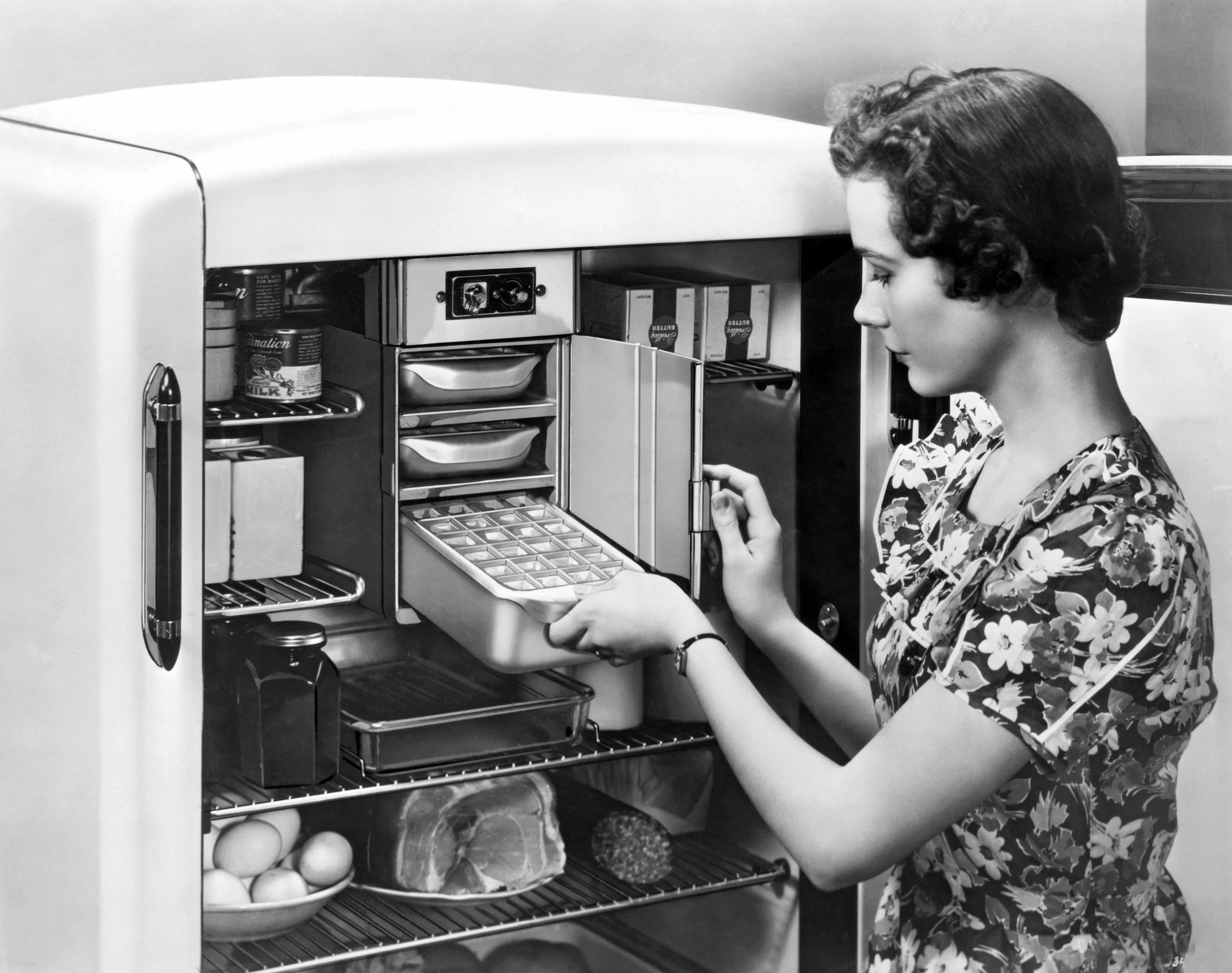
Refrigerators came with the boom of electrical appliances designed to help the American twentieth-century middle-class housewife. The new technology promised safe food, fewer grocery store visits, better management of domestic finances, and smoother meal preparation, including the option of “leftovers” (a term popularized in the 1930s, during the Great Depression). Refrigerators also brought the dazzling possibility of producing “pure ice for cooling drinks and desserts.” 

Though the first ice-producing refrigerator is commonly attributed to John Gorrie in 1850, domestic refrigerators were commercialized from the 1910s, with at least some—the 1913 DOMELRE (Domestic Electric Refrigerator) invented by Fred W. Wolf Jr., for instance—featuring trays for making ice. By the 1920s, such trays were standard in most refrigerators.

While the ice cube may seem the ideal modernist artefact (transparent, geometric, and machine-made), the shape was also simply “convenient.” Cubes filled their trays with no gaps, ensuring optimal use of freezer space (early refrigerators were small). And thermodynamics show that cubes provide a surface-area-to-volume ratio that cools drinks without melting quickly. 

Cubic or otherwise, ice appealed to the housewife’s entertaining and everyday duties. She could provide “frozen dainties” to her guests or prepare her husband a refreshing cocktail. “She’s got everything”, announced a 1937 ad for refrigeration chemicals, “including ice-cubes for the drink that pleases ‘him.’” She could also offer her children cool beverages (“children’s thirst is impatient!”) or ease their scarlet fever symptoms by placing packs of ice cubes on their swollen glands. Manufacturers provided recipes for icy delights, increasing the popularity of cooled drinks and dishes prepared in the home.

Given all these potential uses, housewives were told they needed “a plentiful supply of dainty ice cubes”—this was a design problem about production, as well as form. A 1917 refrigerator produced 32 ice cubes in 24 hours. Ten years later, a 1927 Servel refrigerator made an impressive 120 cubes “in one freezing.” Ice cube performance was even satirized as an indicator of social status: “Nowadays you can tell instinctively whether the so and sos are worth knowing by the number of ice cubes per minute their ice box is capable of throwing off.” 

Manufacturers argued that ice sold refrigerators, playing on those classic themes of modern advertising, abundance and acceleration: “you’ll sell more refrigerators if their trays make more ice cubes!” If production speed was a race for appliance companies, housewives were portrayed as pleased beneficiaries of that competition. Ads showed them holding bountiful bowls of ice cubes in front of refrigerators brimming with eye-filling, succulent food. Sparkling like diamonds (and early refrigerators did cost a not-so-small fortune), ice cubes galore were a mark of the well-settled and refined home. 

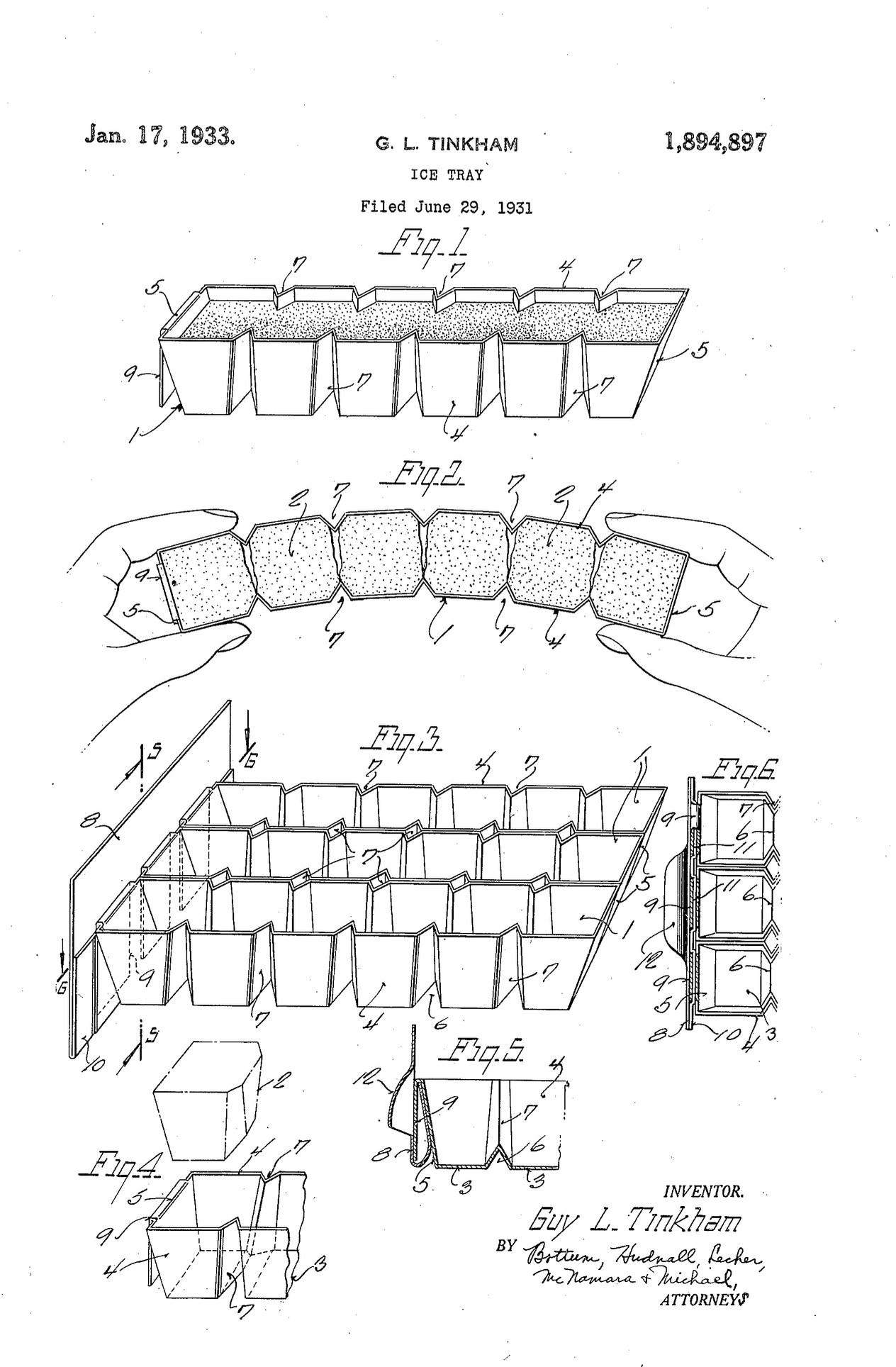
These icy jewels were not always square in shape. DOMELRE’s ice trays were initially repurposed muffin baking tins. Other designs used square or rectangular moulds in varied proportions, determined by tray’s design, material, and the method used to release them. Metal was an ideal material for trays because of its sturdiness, but it was difficult to detach the ice from the surface. In 1933, Guy L. Tinkham patented a metal tray that could bend thanks to its V-shaped ribs, cracking the ice at the indentations and pushing them upwards. Individual compartments delineated by the ribs were tapered inwards, the bottom facet smaller to make them drop easily from the tray when it was inverted or tilted. 

Other clever ideas took off, too. The well-known lever-operated tray designed by Edward H. Roberts in 1952 forcefully separated slender, rectangular-shaped “ice blocks.” Flexible rubber trays were developed surprisingly early—an inventor named Lloyd Groff Copeman was awarded a patent in 1929—while plastic trays became the norm from the 1950s onwards, alongside automatic ice-making refrigerators that brought crescent-shaped pieces of ice into affluent American homes, supposedly ending “the housewife’s 30-year struggle to free ice cubes from trays.” 

If you had ice in your drink when you started reading this, the cubes are probably gone by now. The ice cube is one of the most transient objects ever designed, a geometric manifestation of Zygmunt Bauman’s concept of liquid modernity. Yet homemade ice, once thought to be so luxurious, is still with us, mostly still in cubes. Like Marilyn Monroe’s diamonds, it seems, “these rocks don’t lose their shape.”

Brilliant Move

Brilliant Move is the Brooklyn-based creative studio of Marci Hunt LeBrun specializing in building websites on the Squarespace platform – among many other things.

I love working with small businesses, nonprofits, and other creatives to help them organize their ideas, hone their vision, and make their web presence the best it can be. And I'm committed to keeping the process as simple, transparent, and affordable as possible.

https://brilliantmove.nyc
Previous
Previous

Gallery

Next
Next

Never-melting snowmen