Glenn Adamson
“We have nothing direct from the Titanic, but are perfectly satisfied that the vessel is unsinkable.” So wrote the Vice-President of International Mercantile Marine on 15 April, 1912. What he didn’t know is that the great ocean liner, operated by a subsidiary of his company called the White Star Line, had already sunk to the bottom of the North Atlantic. About 1500 souls were lost at sea. The mighty vessel’s encounter with a massive chunk of ice – a seemingly irresistible force meeting an immovable object – is one of history’s more overdetermined metaphors. Modern technology is defined by increasing dominion over the physical world, an ever-expanding campaign of scientific discovery, economic exploitation, and technological innovation. But when humans go up against materials, materials generally win.
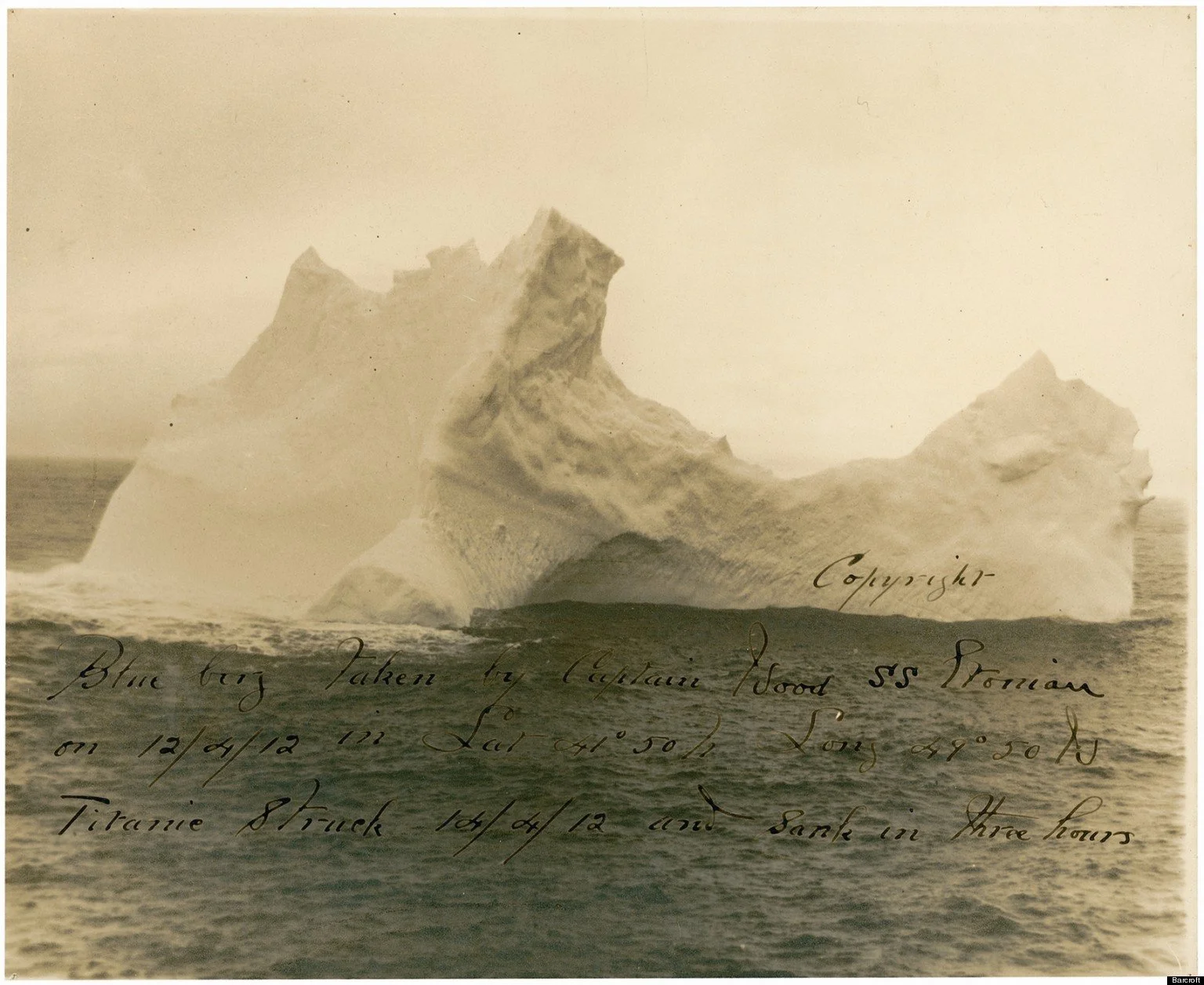
The iceberg that likely sank the Titanic. This photograph, taken by Captain W. Wood aboard the SS Etonian, came to light in 2020. LINK
No material is more clear-cut, in this regard, than ice. It’s unlike any other topic you can read about here on Material Intelligence, not least because of its ephemerality. If you put a chunk of copper, a hank of hair, or a lump of wax on a table, then go out for a few hours, it will still be there when you get back. Do the same with an ice cube, and all you’ll find is a steadily warming puddle.
The science behind this disappearing act is easy enough to understand. At below-freezing temperatures, H2O molecules form a repeating tetrahedral structure held together by hydrogen bonds. Above 32 degrees Fahrenheit (zero Celsius), though, there is enough heat to set the molecules in motion, breaking the lattice. Solid becomes liquid. Curiously enough, the water actually gets denser as it melts. This bit is a little complicated, having to do with the electric charge of the symmetrically-shaped hydrogen bonds, which space out the molecules slightly more than in liquid water. Were it not for this quirk of physics, all our oceans would be frozen solid, and life on earth would likely never have formed.
Even so, there’s no getting around it: ice is a reminder that the material world was not put here for our convenience. It has always led a dance with the deathly; it is painful even to the touch, and hard-to-see “black ice” is among the most perilous hazards of driving. In Japan there are many folktales centering on the Yuki Onna (“snow woman”), a cold spirit who bitterly haunts the living; the medieval European personification of death, the Grim Reaper, is also often associated with a drop in temperature. “Adieu, Dear Emma,” wrote the eighteenth-century British poet Mary Robinson, “Death’s icy hand hath chill’d thy tender frame.” The excellently named Snori Sturluson (also mentioned in Material Intelligence for his thoughts on leather) tells us in his Prose Edda that the end of the world, Ragnarok, will be presaged by three consecutive winters of ice and snow, with “frosts so severe, winds so keen and piercing, that there is no joy in the sun.”

A Yuki Onna depicted by Sawaki Suzshi in his scroll painting Hyakkai-Zukan (“The Illustrated Volume of a Hundred Demons”), 1737. LINK

Zach Schumack, Zug Zug the Cave Man, 2020. LINK
On the other hand, ice does have remarkable powers of preservation, because it blocks out air and halts natural processes of chemical decomposition. A small but significant group of enthusiasts continue to believe that cryogenics holds the key to immortality, and this, in a sense, is exactly what befell Ötzi the Ice Man, a Tyrolian hunter who was likely murdered in about 3275 BC (an arrowhead is still lodged in his shoulder), and then frozen in an ice flow. He was discovered by German hikers 5,266 years later, in 1991, when his body was partially exposed by recent melt. Ötzi has inspired considerable fascination, as well as a mediocre film (Encino Man, 1992) and an outdoor sculpture by Minneapolis artist Zach Schumack, depicting a cave man immured in what looks to be a giant block of ice (actually a construction of clear Plexiglas and epoxy resin). Of the enthusiastic public response to his work, Schumack commented, “it really warms my heart.”
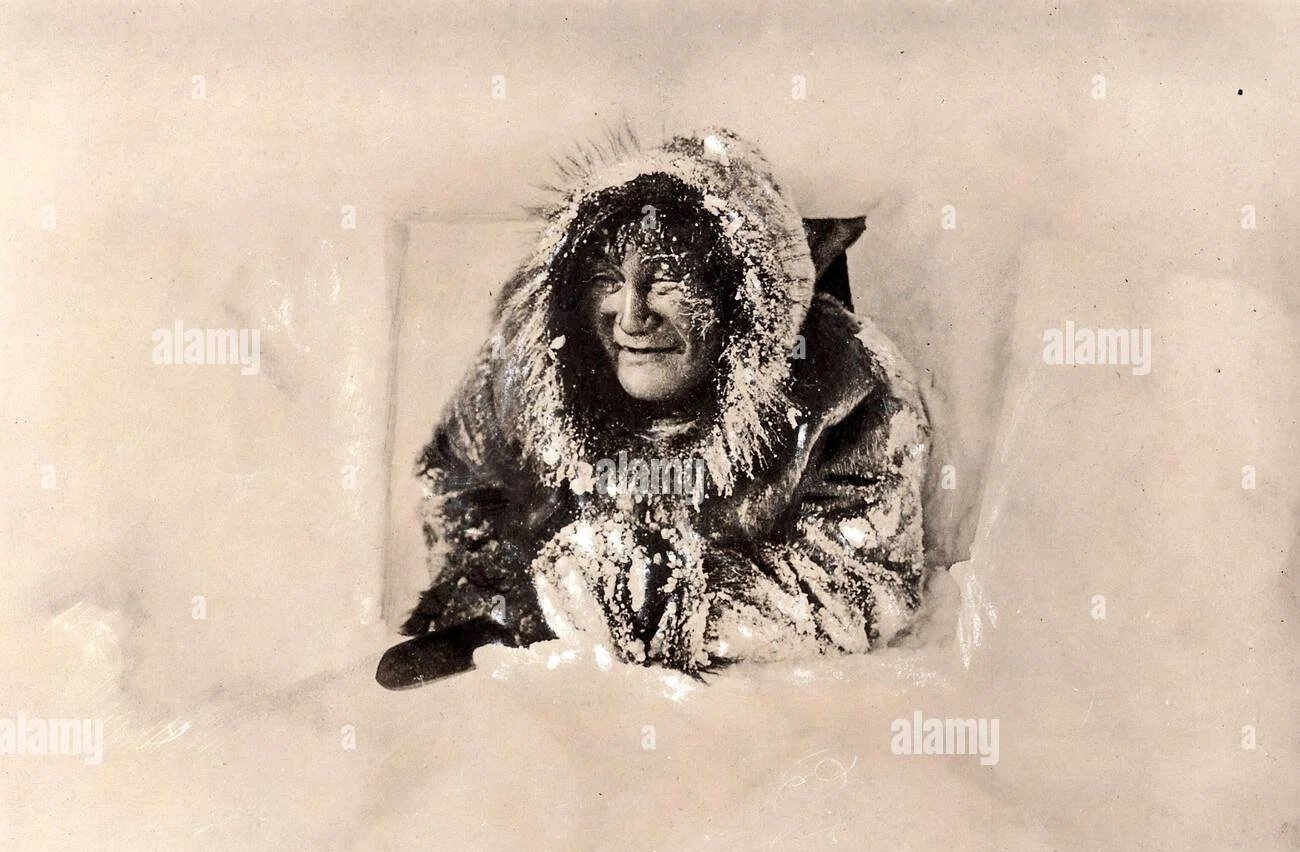
Allakariallak in his igloo, from Nanook of the North, 1922. LINK
We should remember, too, that ice has provided a livelihood for many people. The silent film Nanook of the North, shot in 1922, has a remarkable sequence in which the protagonist – a Canadian Inuit hunter whose real name was Allakariallak – builds an igloo, complete with clear windows made from ice slabs. While the documentary has been rightly criticized for its fakery of costume and other details, there is no denying Allakariallak’s impressive facility in building the structure. To this day Inuit peoples of the Arctic region have a deep understanding of sea ice, which serves as a critical infrastructure for access to hunting and fishing grounds. As with so many other types of traditional material intelligence, their expertise has been affected by climate change, as predictable patterns of seasonal change are disrupted and once-safe stretches of ice become impassable.
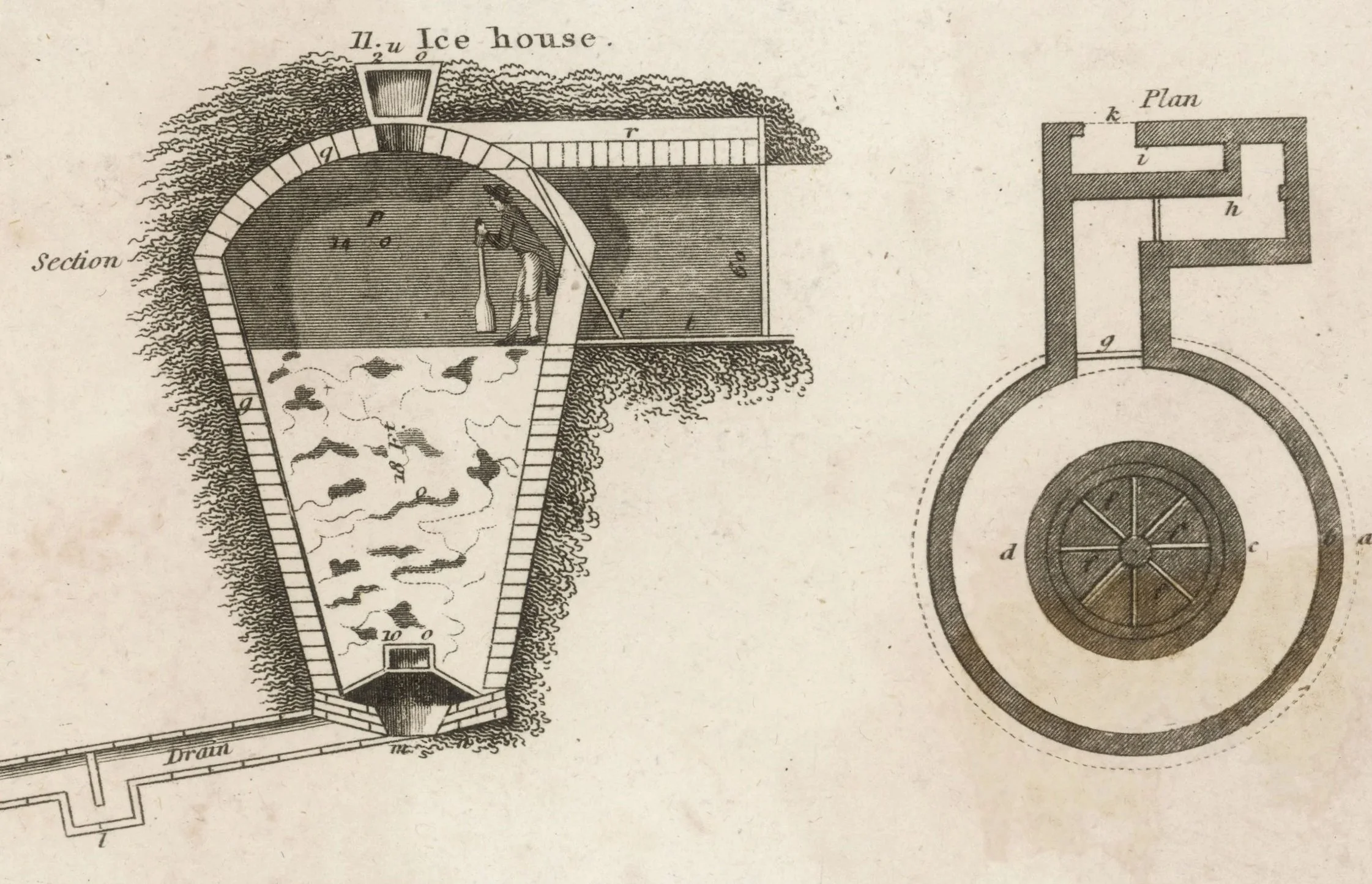
Plans for an ice house, published by James Cundee, Albion Press, London,1809. LINK
Ice is also an industry. I grew up near Spot Pond, north of Boston, which happens to have been one of the first places in the world used for mass ice extraction. Previously it had been a purely local product, cut from lakes and rivers during the winter or hauled down from mountaintops, and then stored in underground chambers. If you didn’t live in a place where water froze in the wintertime, you never had ice – maybe never even saw it. In temperate climates, summertime ice was a luxury, and it was treated as such. Among the most extravagant creations of ceramic manufacturers and silversmiths were monteiths, large bowls with notched rims used to chill glasses in ice water. In 1870, partly inspired by the recent annexation of Alaska, the Gorham Manufacturing Company of Rhode Island created a witty spin on the this precedent: an “ice bowl” that looked as if it were hewn out of a glacier, complete with polar bear handles. The curators at the High Museum of Art, which has an example in its collection, note that when the bowl was filled with shaved ice, “frost would form on the outside and water would drip down the silver icicles, creating a theatrical presentation for the table.”
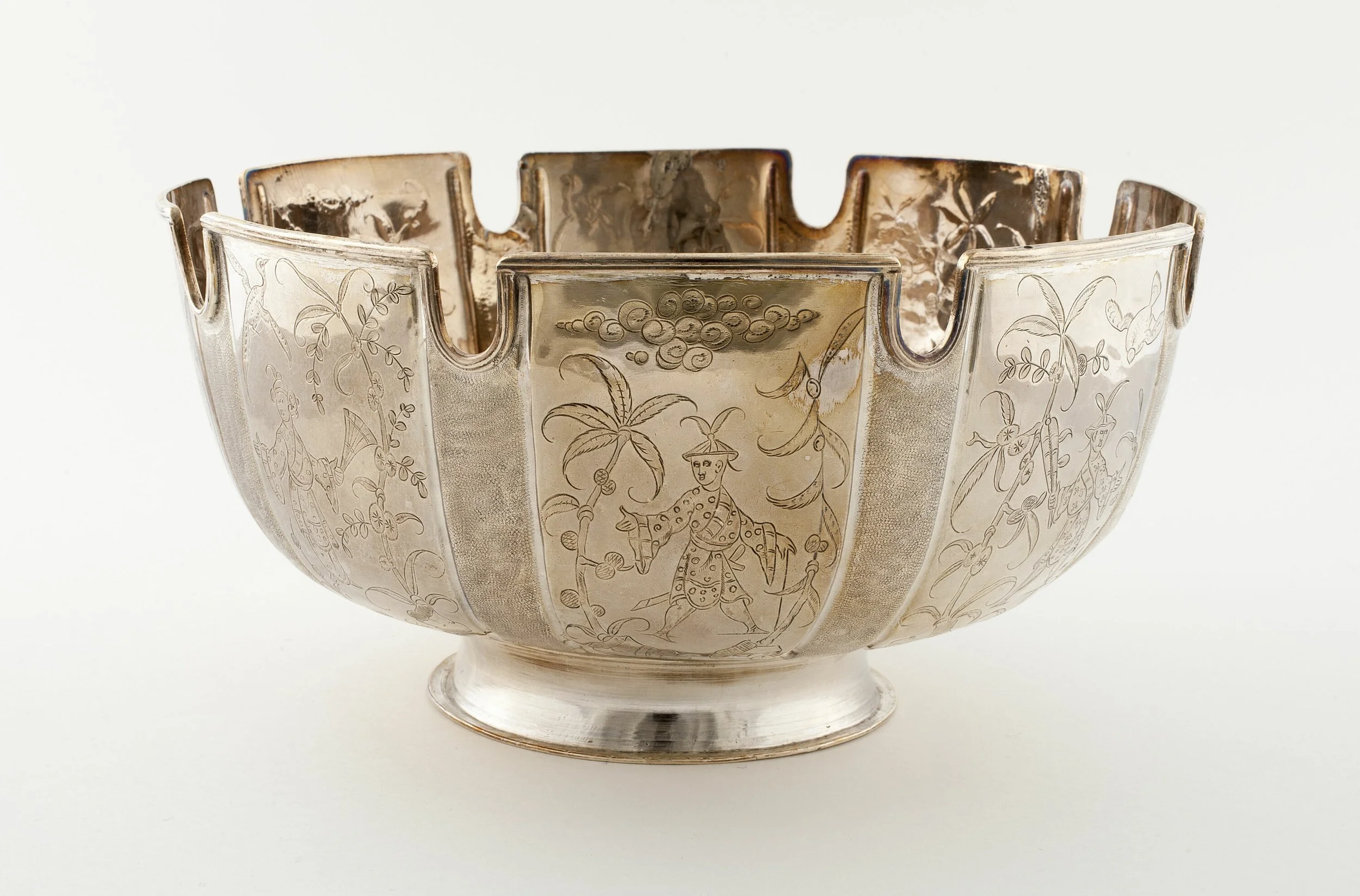
Monteith, c.1685–86. Mark attributed to Daniel Beverley (active London c. 1665–97). Art Institute of Chicago, Richard T. Crane Jr. Memorial Fund, 1947.483. LINK
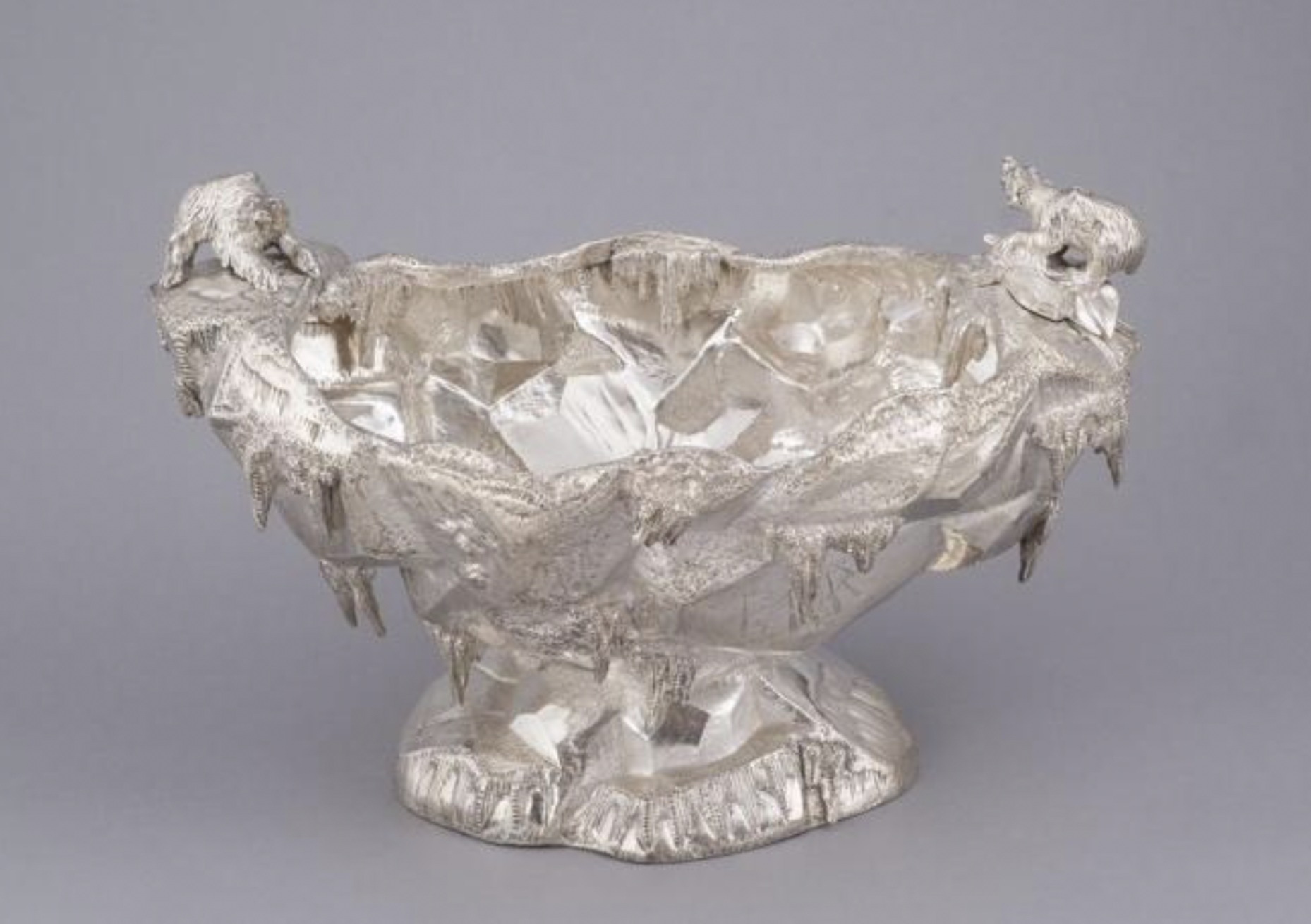
Gorham Manufacturing Company, Ice Bowl, 1870. High Museum of Art. Virginia Carroll Crawford Collection, 1990.85. LINK
[Chipstone monteith to be added, will be shot by Jon]
Gorham’s spectacular silver centerpiece dates from a time when ice was becoming more plentifully available. A few decades earlier, a young entrepreneur named Frederic Tudor – soon to be known as “the Ice King” – started taking 200-pound slabs from Massachusetts freshwater sources, including Spot Pond, and shipping it to the tropics, insulating the cargo with sawdust and hay. The extraction was a tough job, done with horse-drown cutting plows, axes, saws, and tongs, all, of course, done outdoors in freezing temperatures. Tudor also had a big operation at Walden Pond, which is mentioned by Henry David Thoreau. A keen observer seasonal freeze and thaw, which announced itself with a great cracking and booming sound, he also looked on Tudor’s workforce with his characteristically cold-eyed sympathy: “I was wont to pity the clumsy Irish laborers who cut ice on the pond, in such mean and ragged clothes, while I shivered in my more tidy and somewhat more fashionable garments.”
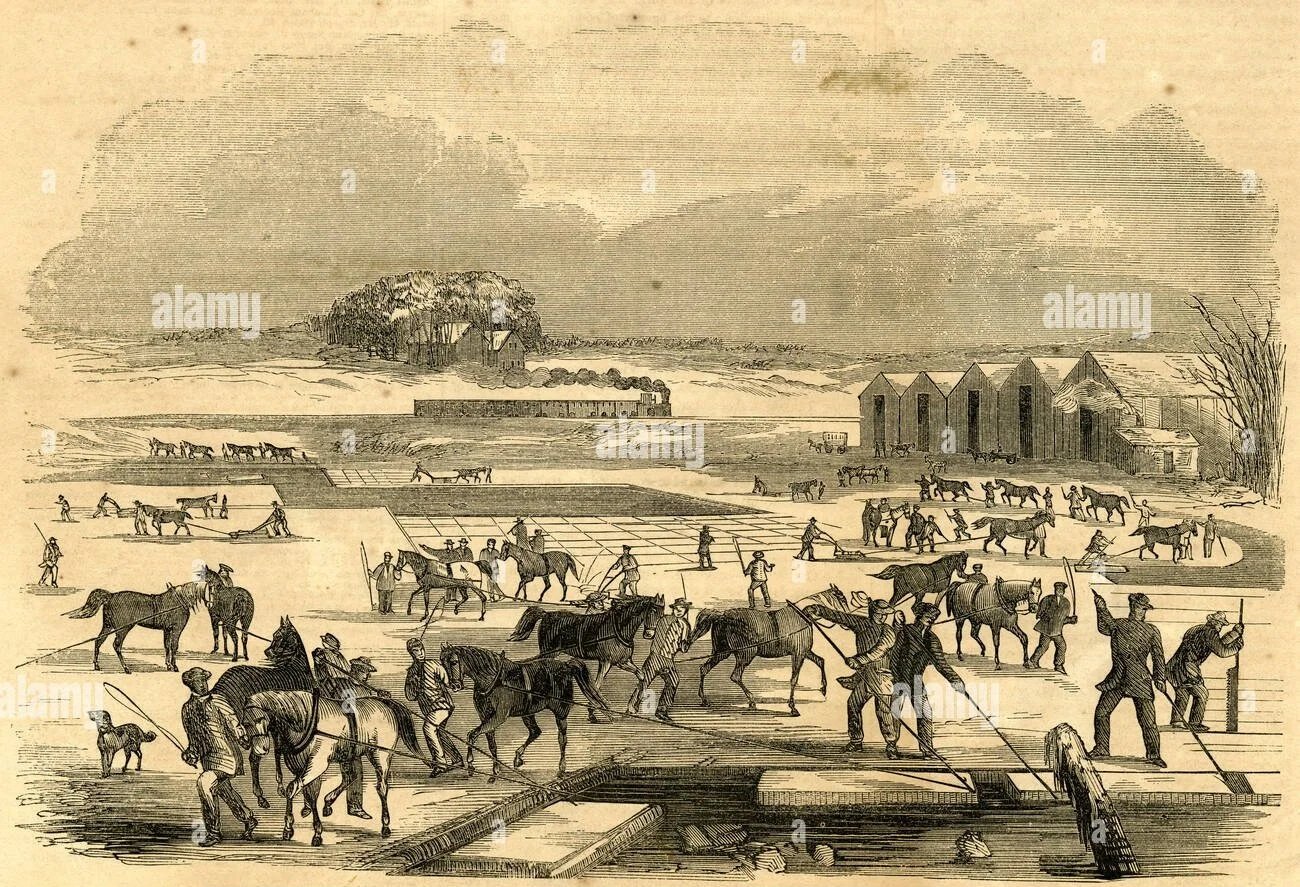
Ice harvesting at Spy Pond, Massachusetts, 1854. LINK
Tudor’s first shipment was to Martinique on the brig Favorite, in 1806. The ice did make it there, but it melted before he could sell it. He used what was left to preserve fruit from Cuba on the return voyage. By the 1830s Tudor had worked out his storage problem and then some. He was shipping all the way to Calcutta and had his own ice houses in Bombay, Charleston, Havana, Jamaica, Madras, New Orleans, and Singapore. He was an effective marketer, too, promoting the medical use of ice in hospitals and the pleasures of chilled drinks on a summer day. Other entrepreneurs built their own businesses off the back of the one Tudor had created. In London, a Swiss immigrant named Carlo Gatti began importing Norwegian ice in the 1860s, keeping it in huge underground wells, and using it to make ice cream that could be sold by street vendors. One of his warehouses can still be visited today, for it now houses the London Canal Museum.
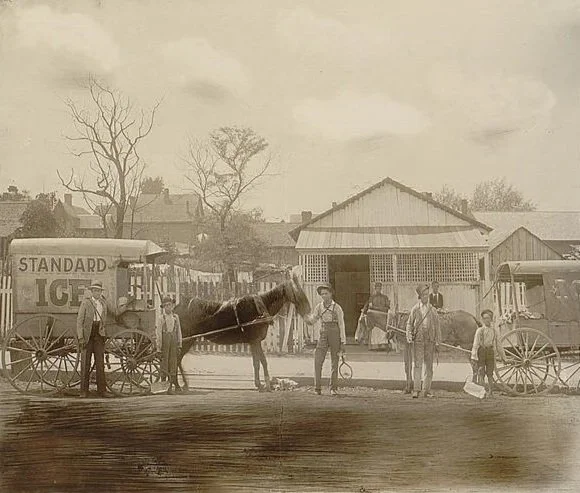
A horse-drawn ice wagon making home deliveries, c. 1899. LINK
Whether conveyed by ship, rail car, or wagon, ice eventually found its way to domestic ice boxes. These were typically built of timber and lined with zinc, with an insulating layer of sawdust, straw, cork, or even seaweed in between. Typically, the ice was stored in a single large block to slow melting; the intention was not to consume the ice itself, but to keep meat and other perishables. In the 1880s, according to the Antique Ice Tool Museum, there were no less than 90,000 people were employed in the trade in New York City, along with 5,000 horses. What came next, of course, was refrigeration. The vast ice distribution network melted away without trace. In a phenomenon that is all but unique in the annals of modern technology – which has everywhere concentrated manufacturing in factories of increasing scale – ice production was radically decentralized. It could now be made in every home kitchen, cube by cube.
This did not entirely end specialized ice production, however. Come the night of the big party, someone will probably have to head to the supermarket or convenience stores to buy a bag or two of mass-manufactured ice. In fact, the modern convenience store itself is an outgrowth of the ice industry. The first successful franchise in the sector, 7-Eleven, began its history as an outpost for the Southland Ice Company, based in Dallas, in 1927. Eventually it spun off its ice-making division; to this day this company, Reddy Ice, remains the largest producer in the USA.
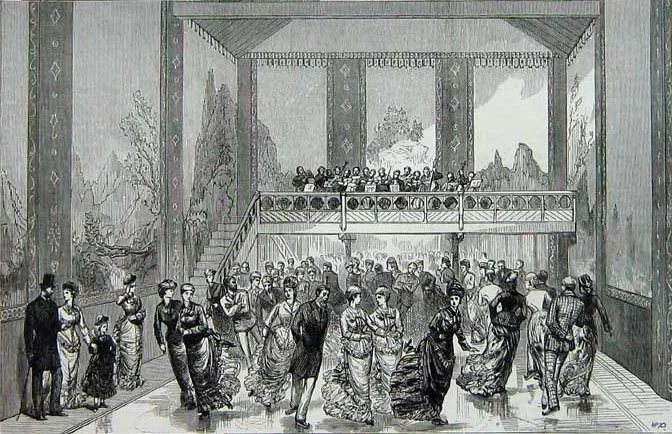
Skating at the Glacarium in London, 1876, from the Illustrated London News. LINK
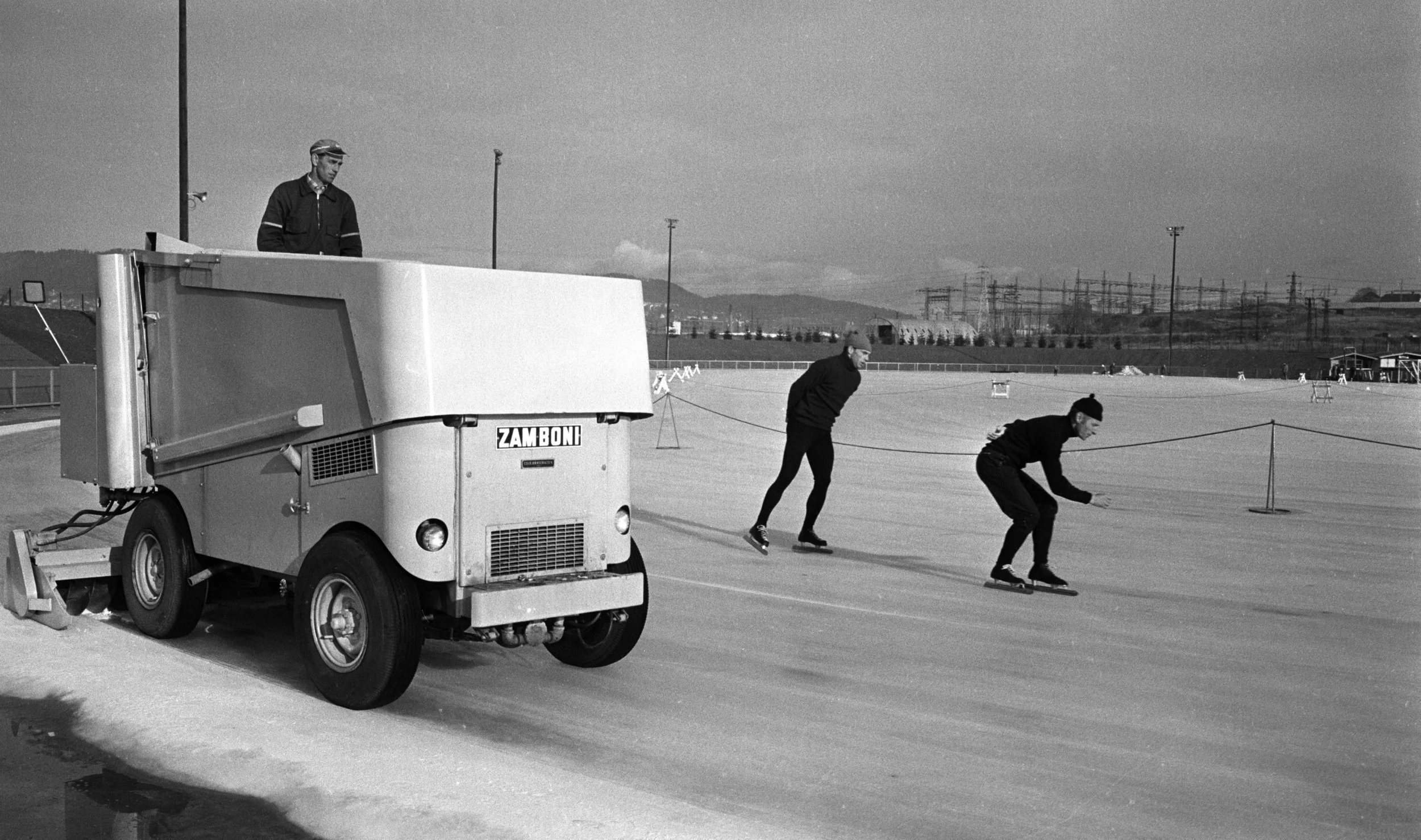
A Zamboni machine in action at an outdoor track in Oslo, 1966. LINK
Ice is also made in large quantities for skating, on rinks and tracks maintained through an elaborate hidden infrastructure. On top of a subfloor is laid a dense matrix of coolant pipes, over which the ice is formed, about one inch thick. The result is an idealized version of a frozen natural pond, dead flat, without the gentle ripples and protruding rocks of the genuine article. When this simulacral technology was initially developed – the first rink mechanically made using coolant, London’s Glacarium, opened to the public in 1876 – the skating surface had to be maintained by hand, a process of scraping, washing, and smoothing with water. This might take a crew of four people an hour or so.
No one has to do this anymore, thanks to an Italian-American mechanic named Frank Zamboni, Jr., who, appropriately enough was originally from a town called Eureka, in Utah. By the 1940s he was in Los Angeles; he’d gotten his start in the ice block business, then opened a skating rink there called Iceland. It was one of the largest in the country, extremely labor-intensive to maintain, and Zamboni began experimenting with vehicles to quickly resurface the ice, shaving down the rough surface with a blade at the front, and recoating it with fresh water at the back. One of his first machines still survives; adapted from a Willys Jeep, it was first used at Denver University in 1953. That same year he received a patent for his invention. Today the Zamboni, one of few everyday products that still bear the name of their inventor (others include the jacuzzi, the saxophone, and the mason jar), is in use worldwide. The company estimates that its machines travel about 2,000 miles a year, on average, round and round and round.
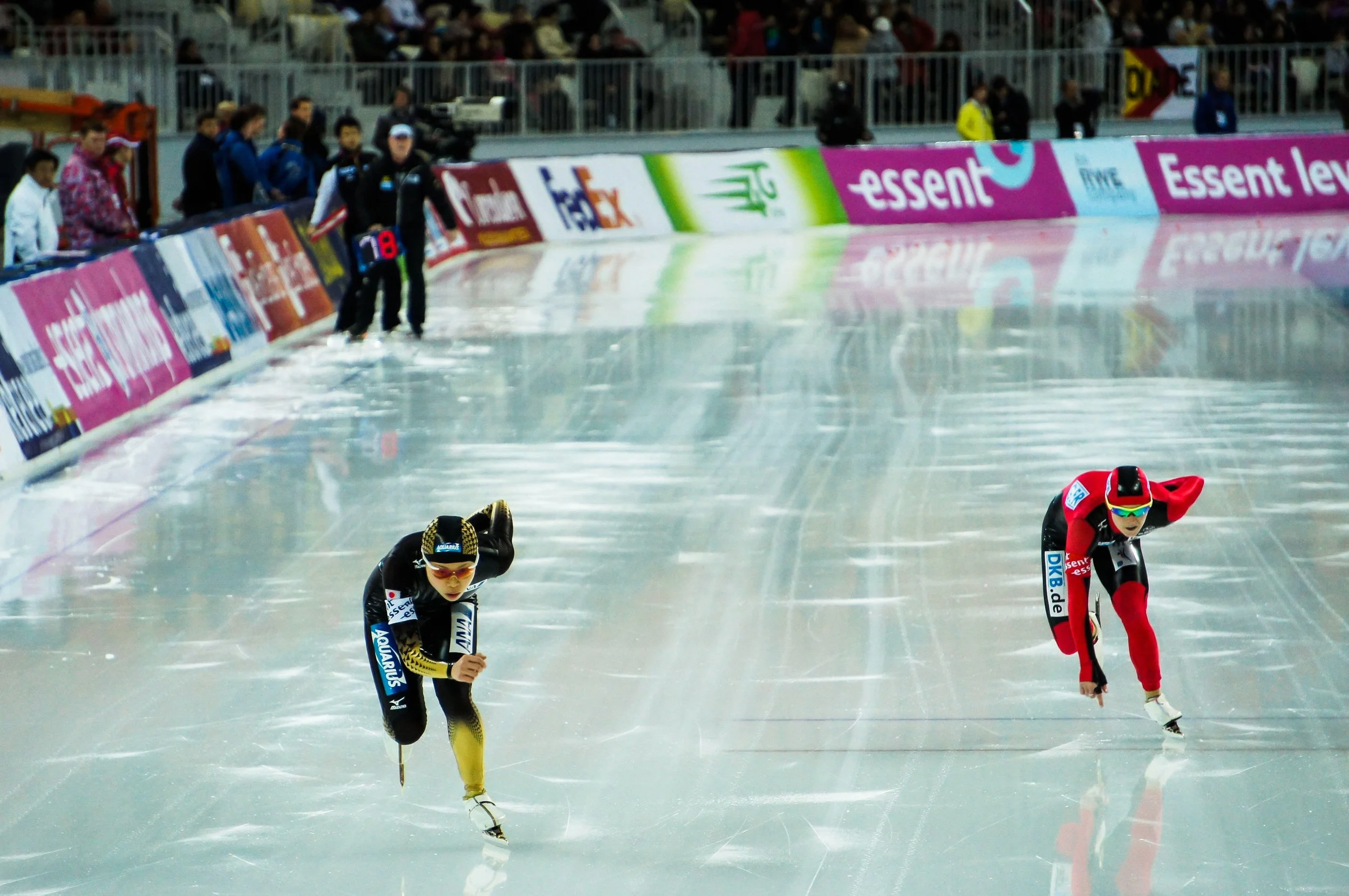
Speed skating at the 2013 Winter Olympics in Sochi, Russia. LINK

Curling at the 2022 Winter Olympics in Beijing. LINK