It was 6am on a dark and chilly December morning in London, 2018. I often arrived at the office before anyone else. My twins were then four years old, and it was the only way to fit in a full day before the second shift began: the rush to leave on time, race for the train, and collect the children before their nursery closed. As a curator at Tate Modern, I was aware that colleagues had been arranging to transport 24 ice blocks, fished out of the Nuup Kangerlua fjord in Greenland, to London. I barely listened, though. I had enough on my plate and we were always dealing with improbable artistic demands; and if I’m honest, Olafur Eliasson’s Ice Watch struck me as indulgent. So much effort and expense, for nothing.
Then I saw it.
The turquoise blue had a depth I can still recall eight years later – a color embedded, not applied. A blue that felt impossible to make, and just as impossible to destroy. I was completely alone and it was magical.
We are told that the Greenland ice sheet is losing around 200–300 billion tons of ice each year, and that rate is expected to increase dramatically. In a city like London, still largely unaffected by rising sea levels, these facts remain strangely abstract. Instead, we tend to focus on the happenings of our everyday lives, ignoring the impending crisis facing humankind. Standing there alone, utterly in awe, I made a pact with myself to visit Ice Watch every morning until it disappeared.
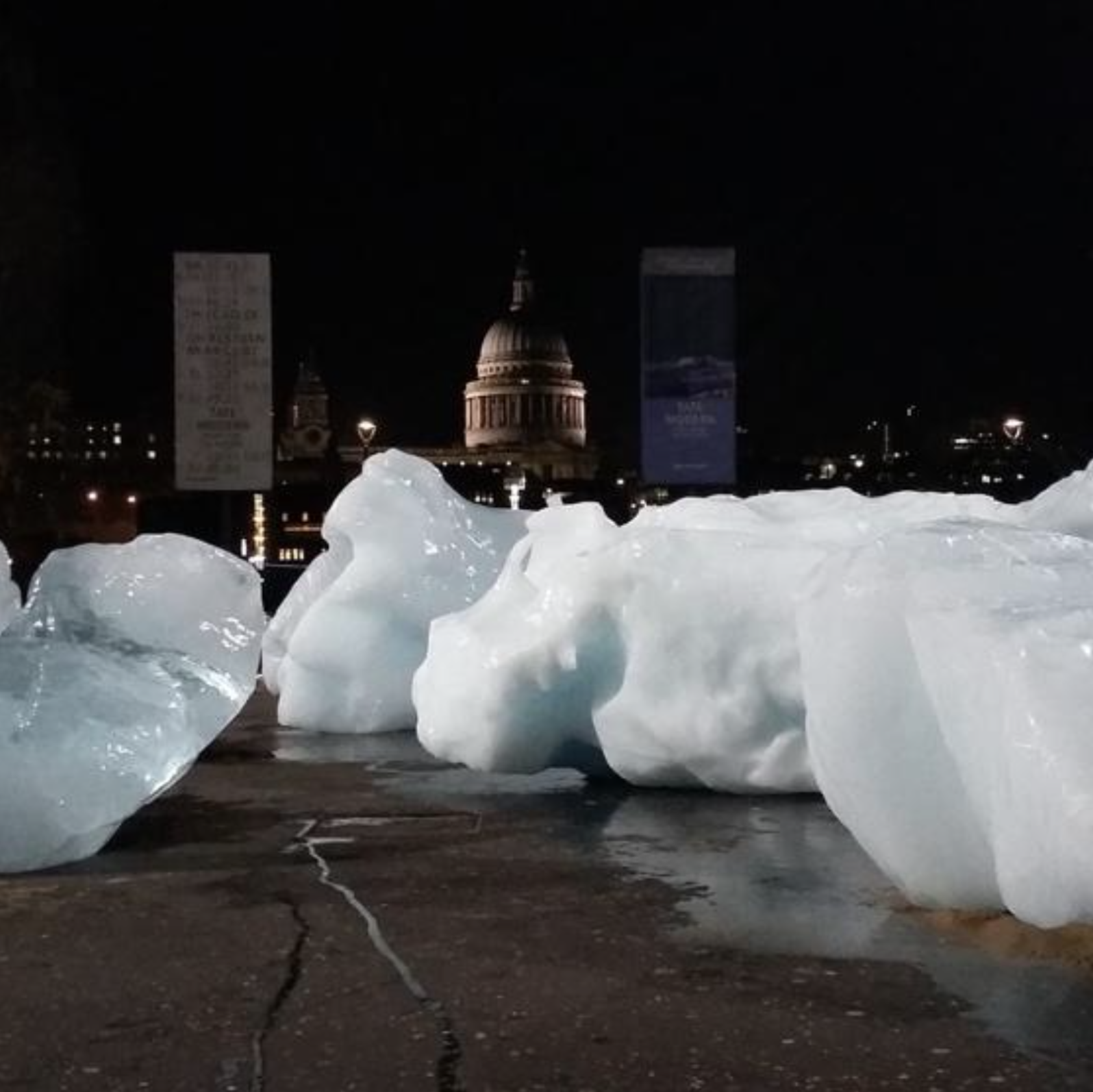
Olafur Eliasson, Ice Watch, 2018. Photo: Kerryn Greenberg
I wasn’t alone. The next morning, word had already gotten out and a handful of people, wrapped in coats, moved slowly among the ice in the dark, kneeling to peer into deepening crevices, taking photographs, reaching out to touch the melting surfaces. By the following day there were even more people. Puddles had spread and the lumps of ice had visibly shrunk.
After a few days, the blocks, each weighing between 1.5 and 5 tons when installed, were melting quickly. It was an unusually mild winter, and the unease I’d felt before returned. What had it taken to bring them here? What was the cost – in carbon, in effort, in money – of this fleeting spectacle? Could the end justify the means? And what exactly was the end, anyway?
As they shrank, the blocks seemed to lose their authority. Slumped on the pavement, diminished, they seemed so far from the beguiling masses they had been just days before. It was no longer beautiful; it was depressing.
I started walking a different way to work.
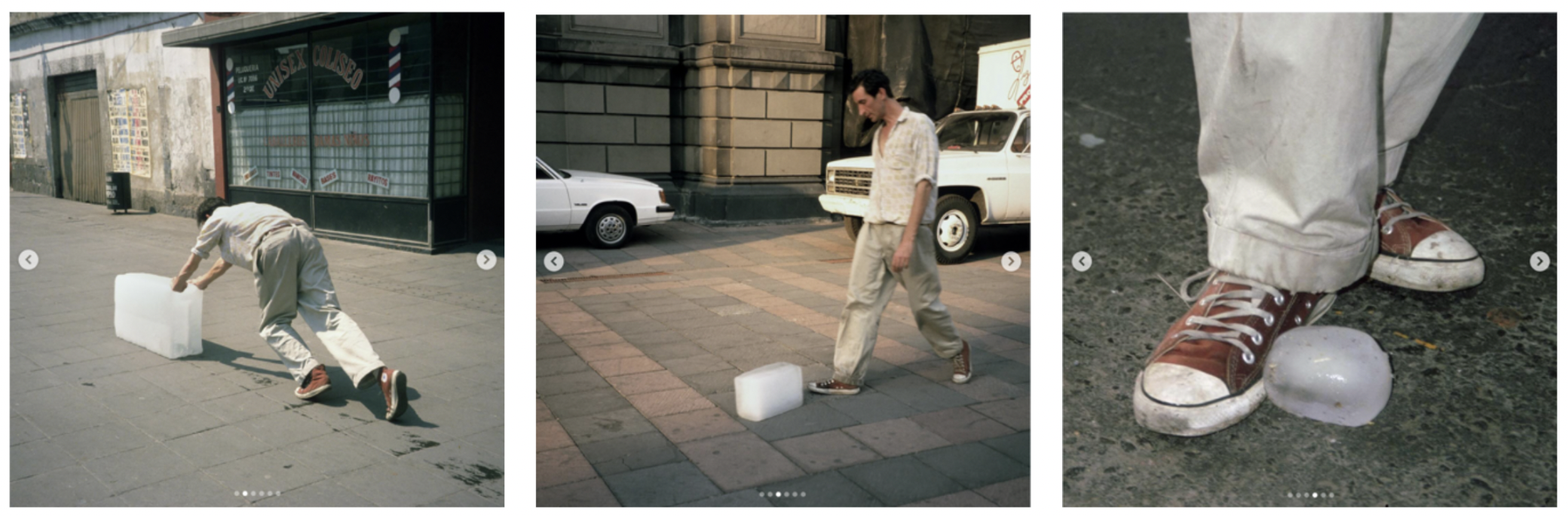
In 1997, Francis Alÿs spent nine hours pushing a fifty-kilogram block of ice through the streets of Mexico City until it melted completely. At the end of the day, despite the exertion, the artist had nothing to show for his labour except the documentation of the act itself, which he titled Paradox of Praxis I (Sometimes Making Something Leads to Nothing). Though he conceived the work as a meditation on the nature of labour rather than a comment on climate change, I found myself thinking about it and my own (in)actions as I avoided the inevitable demise of Ice Watch.
 Brilliant Move
